
Best Scrunch AI Alternative for GEO | Pricing, Reviews, Funding and More
Considering Scrunch AI for GEO? See what it actually does, what it does not do, and learn about a better alternative.

If you have searched for Scrunch AI reviews, you have probably noticed that every reviewer lands in the same place: great monitoring, nothing after that.
We did not want to write another version of that review. So instead, we tested Scrunch on our partner agency, tested it through every feature, and then compared it point by point against Chosenly.
If you are a B2B company trying to show up in ChatGPT, Perplexity, or Google AI Overviews, this comparison will tell you exactly what each tool does, what it does not do, and which one is worth your time.
TL; DR
| Chosenly | Scrunch AI | |
|---|---|---|
| Data reliability | Breaks prompts into seed keywords and criteria. Screens out prompts that will never recommend a vendor. Built for B2B buying behaviour. | No filter for irrelevant prompts. Miscategorised our partner agency as a software tool making all the auto-generated prompts incorrect |
| Breadth of GEO strategies | Content creation, content updates, content repurposing, listicle outreach, Reddit, PR, positioning. | Monitoring, competitive benchmarking, citation tracking, AI bot traffic. |
| Prioritization across strategies | Tells you what to focus on first based on visibility gaps and where you have a real shot at winning. | Surfaces gaps but has no opinion on where to start. |
| Prioritization within a strategy | Names the exact pages, contacts, listicles, and Reddit threads to act on first. | Shows cited domains with an Influence Score. No contact info, no content brief, no instruction on what to do with any of it. |
| How much data the tool gives you | Difficulty scores, search volume, citation potential, existing page check, outreach contacts, and the logic behind every recommendation. | Citation share, sentiment, and Influence Score. |
| Does the work for you | Drafts content, runs outreach end to end, automates Reddit, does content refreshes. | Zero automation. |
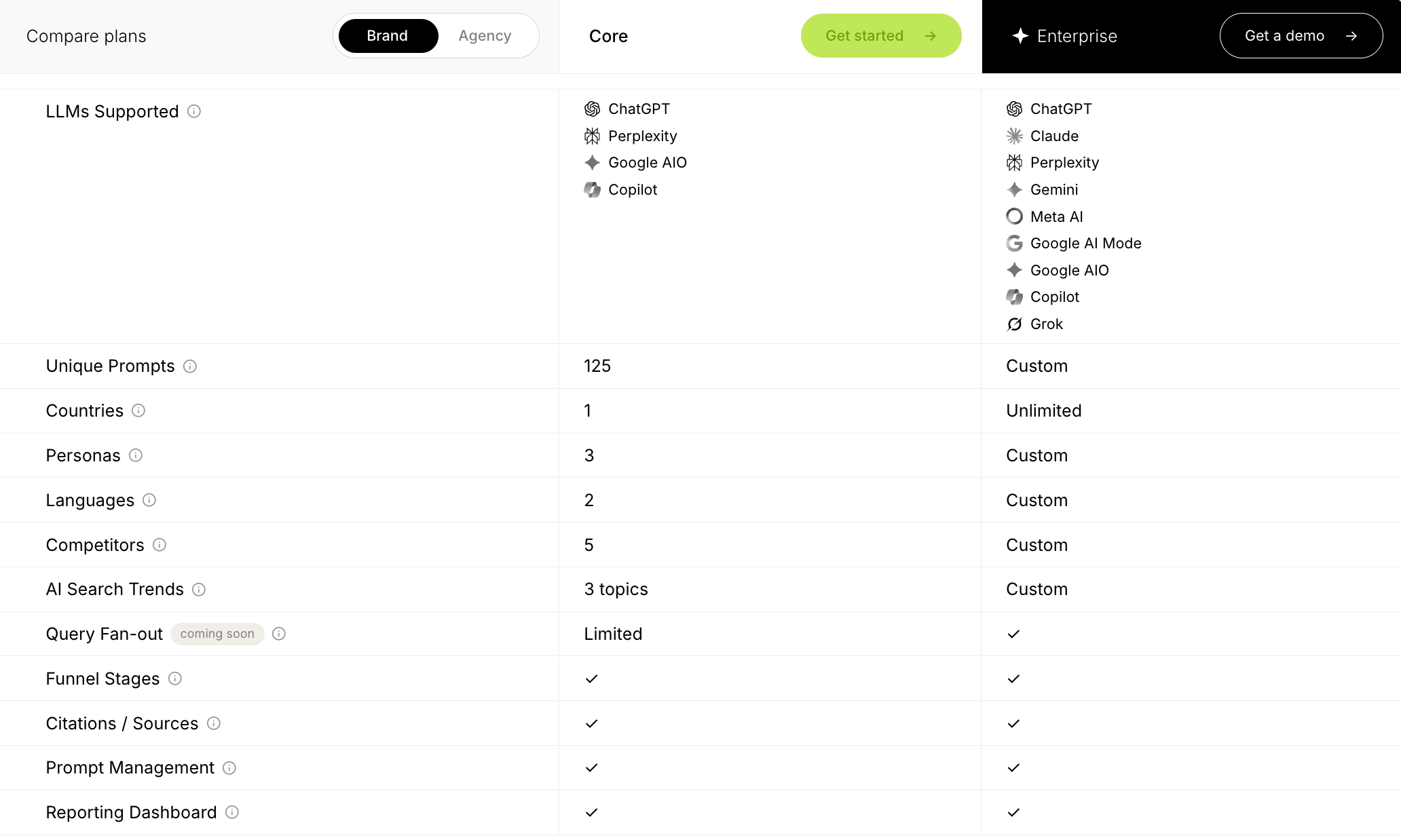
| Human support | Slack support and 1-1 calls for every Chosenly client | Email support on Core and Agency plans. Slack and strategy calls locked to Enterprise plan |
Scrunch AI reviews
If you search for Scrunch AI reviews, and look through the top search results, these are the kind of reviews you see:
Scrunch AI review 1:
“Recommendations is the weaker part. It was confusing with the groups the platform was recommending. It was not clear if we could create our own groups to organize the prompts. It is also not clear if brands are already included in results. Sometimes the system says we are not mentioned but our brands are in the results.” — G2 reviewer
Scrunch AI review 2:
"Most insights you can get for free. Run prompts yourself, note citations and competitor mentions. Scrunch consolidates this, but doesn't discover anything new." — GrowthPact
In comparison, here’s what people are saying about Chosenly:
Chosenly review 1:
“We closed a $120k USD client from ChatGPT. The best part was the lead said that they already trust us because ChatGPT deep research recommended us. I’ve only ever heard this when a lead comes from a human referral before this!”
— Founder, B2B SaaS Agency
Chosenly review 2:
“We put our trust in Chosenly after seeing their knowledge about LLM visibility was early on ahead of the established SEO analytics firms. That trust turned out to be well placed and after a few months we won our first 5-digit deal from LLM visibility”
— CEO, Fintech SaaS
How to pick the right AI search tool
Scrunch AI vs Chosenly
1. Data reliability
Every AI visibility tool starts with prompt tracking. The question is what you're tracking, and how. Get this wrong and your visibility score moves around for reasons that have nothing to do with what you actually did in AI search.
Chosenly
- Breaks prompts into seed keywords and criteria. Every buyer prompt, no matter how it is phrased, is a combination of a base keyword and one or more evaluation criteria. Chosenly tracks both, which means it captures the full range of how your buyers search rather than treating each prompt variation as a separate thing to monitor.
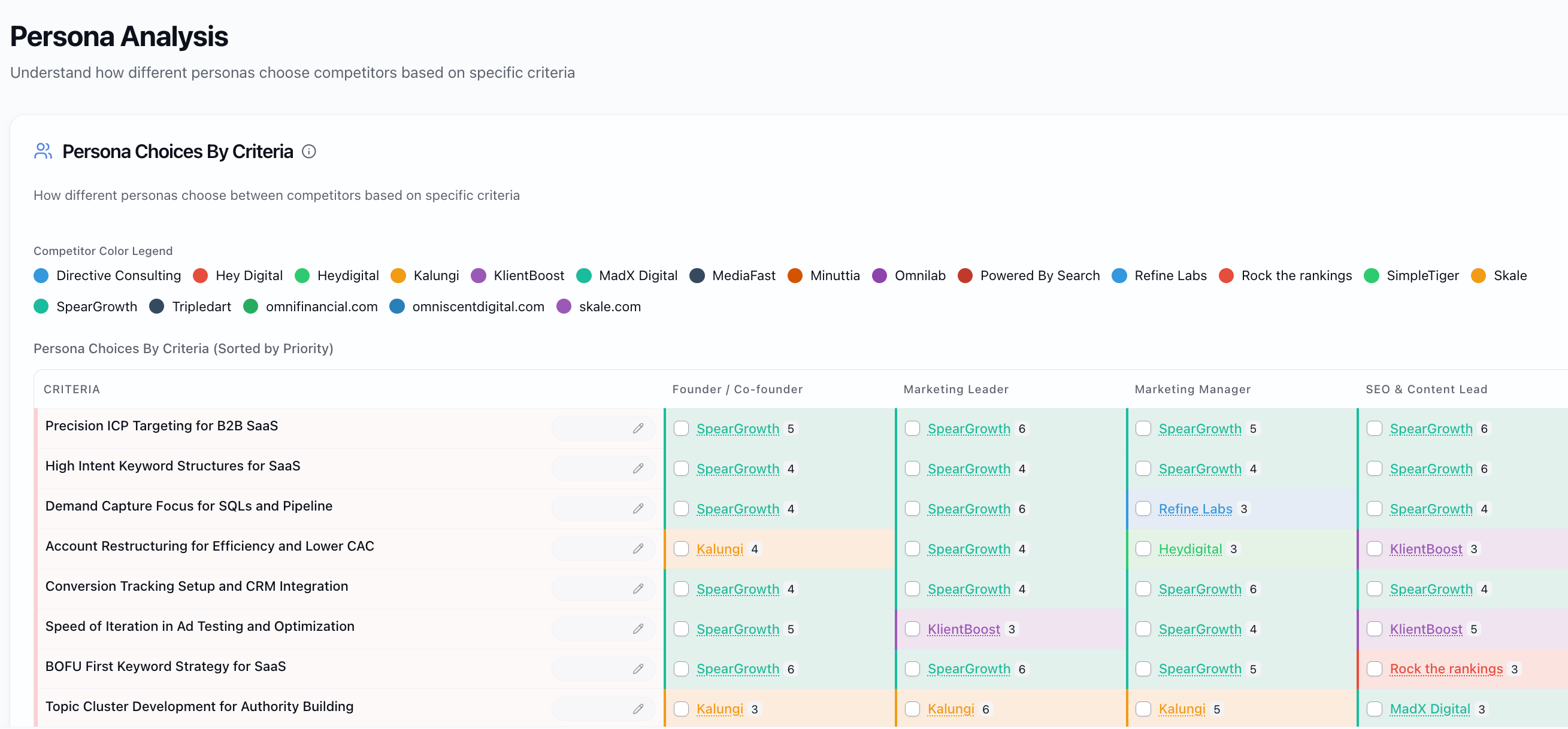
- Screens out prompts where a vendor could never be recommended, so they do not drag down your visibility score.
- Designed specifically for B2B, where the same underlying question gets asked in different ways depending on the buyer's role, stage, and context.
Scrunch AI
- Scrunch generates prompts based on keywords you or the tool's suggestion engine provide. When we ran our partner agency through it, the prompts it surfaced were tool-comparison queries, the type a buyer shortlisting software products would use. The agency isn't a tool. Scrunch had miscategorised what kind of entity they are entirely.
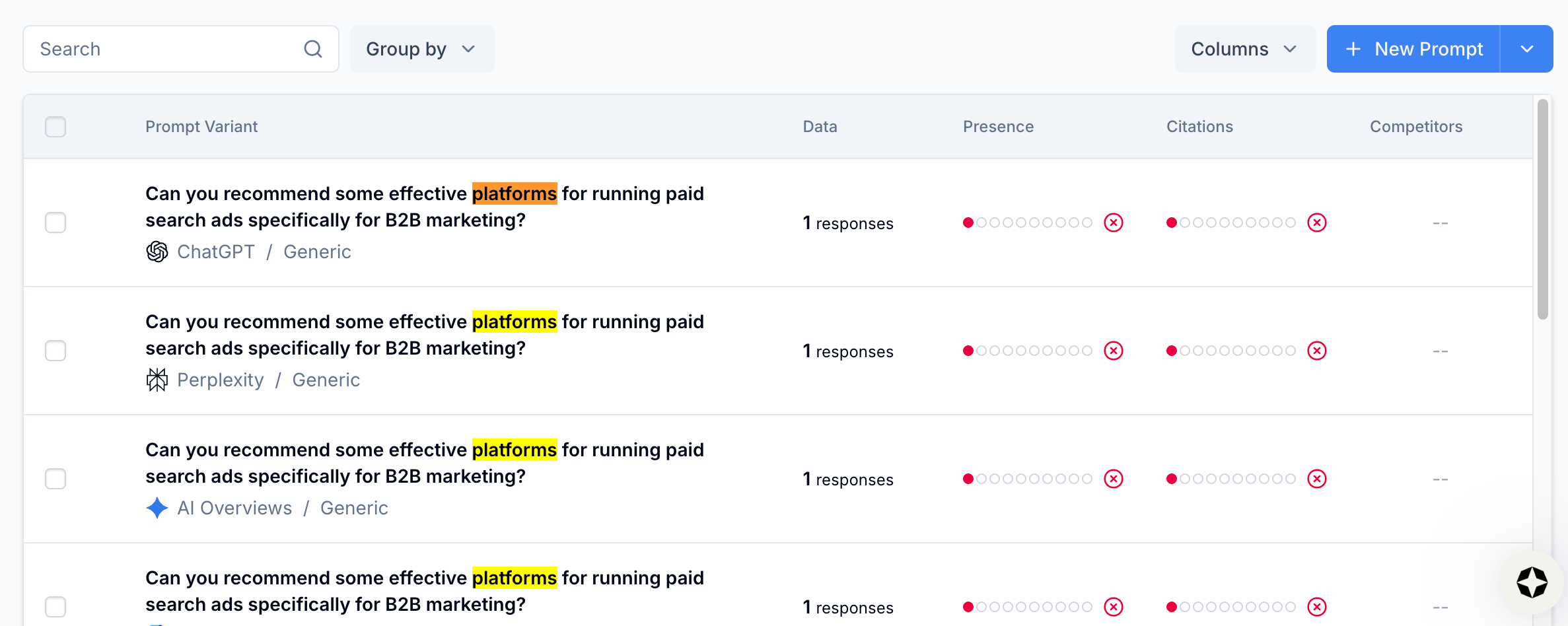
- The onboarding made this worse. During setup, Scrunch auto-populated services for the agency that had no basis in reality. It pulled in email automation services, something they have never offered and have never published anything about.
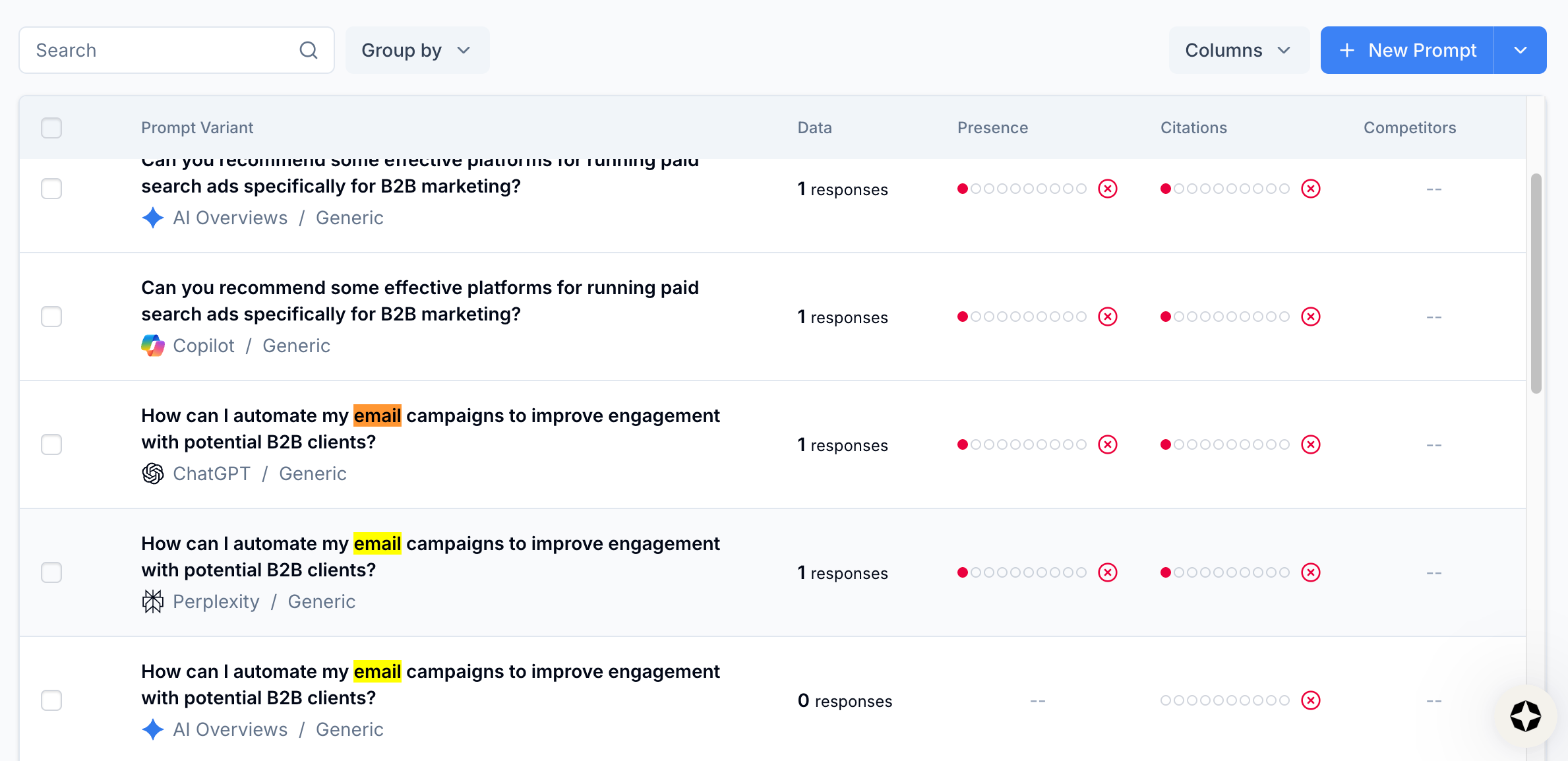
- There's also no filter to remove prompts that would never recommend a vendor regardless of how well you're optimised. Prompts like these will cause our AI visibility score to tank for no reason, and no matter what we do our AI visibility for these prompts will always remain 0. Since this data is the base on which everything else happens, this will make everything else pretty confusing/misleading.

2. Breadth of GEO strategies supported
There are a lot of things you can do to improve your AI visibility. A tool that only covers a couple of them boxes you into a narrow playbook.
Chosenly
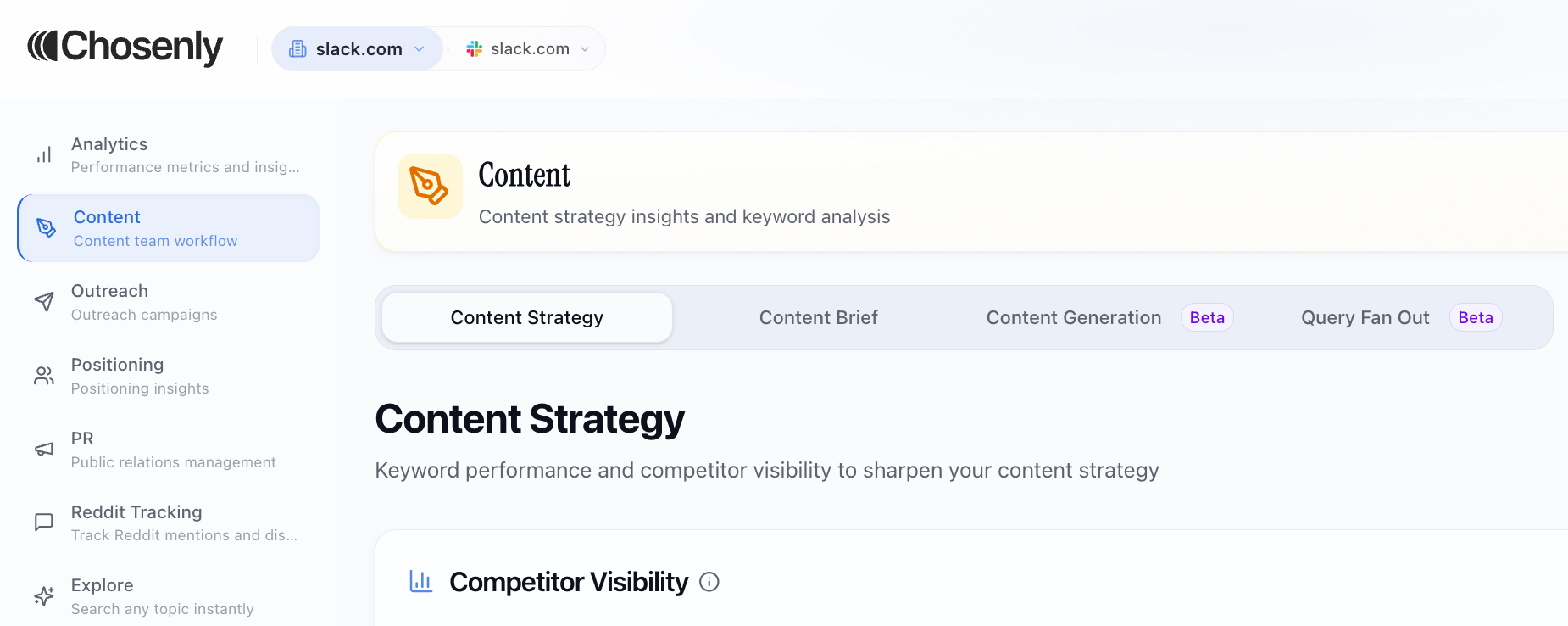
- Supports content creation, content updates, content repurposing, listicle outreach, Reddit, PR, and positioning.
Scrunch AI
- Supports monitoring, competitive benchmarking, citation tracking, and AI bot traffic analysis.
- Does not support content creation, content updates, content repurposing, listicle outreach, Reddit, PR, or positioning. Every one of these has to be handled outside the platform with separate tools and separate budget.
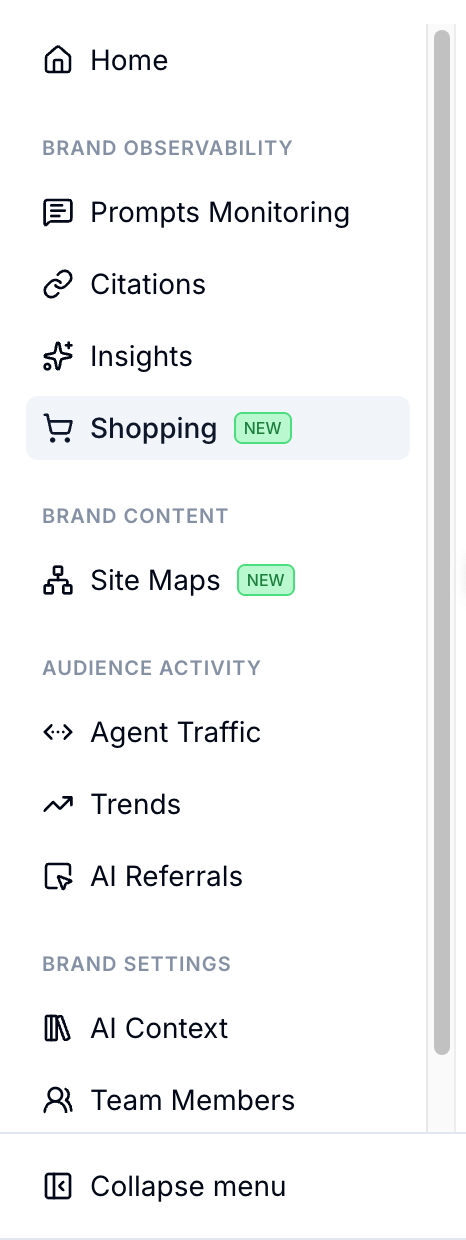
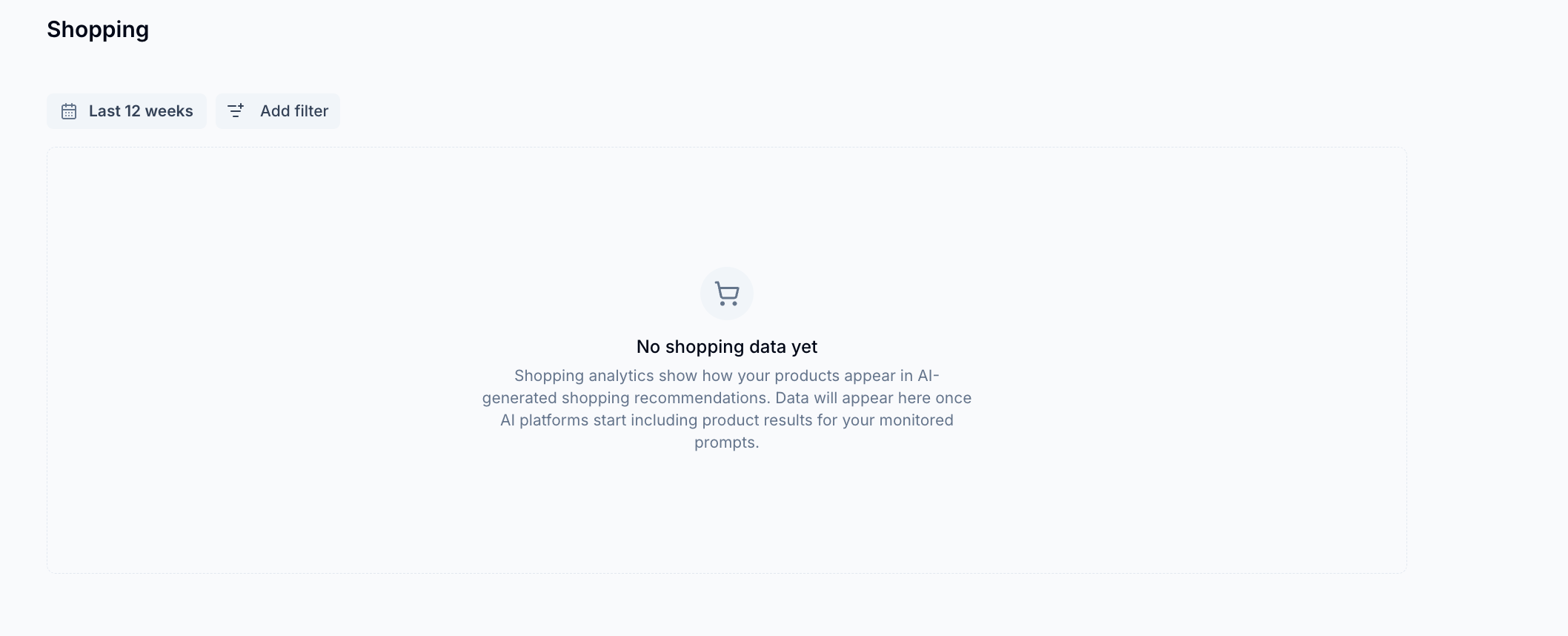
- Scrunch also has a Shopping tab in the dashboard, marked as new, built to track how products appear in AI-generated shopping recommendations. This tells you something about who the platform is primarily built for: B2C, e-commerce, and consumer product brands, not B2B companies.
- Scrunch has a feature, the Agent Experience Platform (AXP), that serves an AI-optimised version of your site to crawlers. It is the one feature that gestures toward optimization rather than just monitoring. But it is locked to the Enterprise plan, requires CDN integration with providers like Cloudflare or Vercel, and involves a setup process that is not lightweight. We couldn’t find any proof that even if you did all of this work, it’ll actually help with AI visibility, so we actually recommend against setting this up.
3. Prioritization across strategies: what to do first
Both these tools can help you do a lot, and that's great, but can get distracting really fast. The next question is which two or three things to focus on first. A good tool should have an opinion on this based on where you actually have a shot at winning.
Chosenly
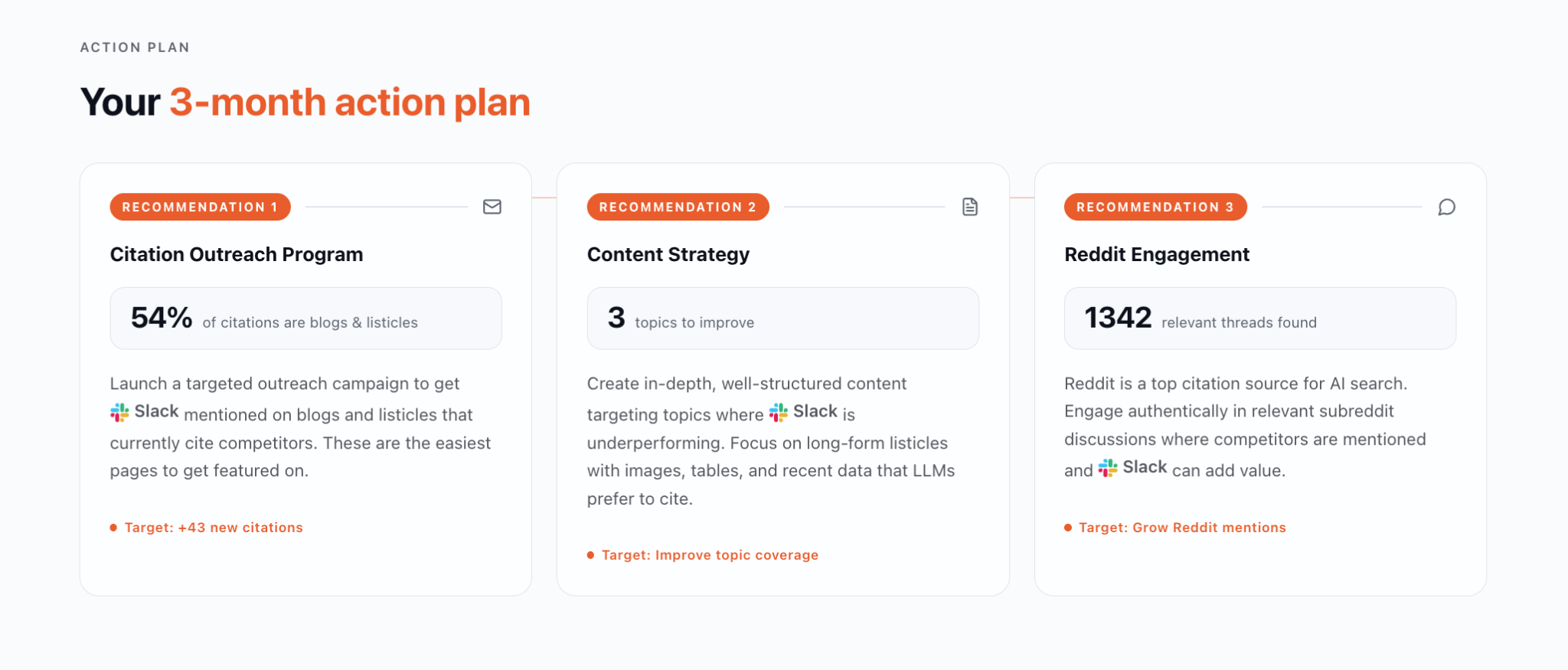
- Maps your current visibility gaps against the strategies most likely to close them, so you're not guessing which lever to pull first.
- Shows you exactly where competitors are winning over you in AI search and why so the starting point is based on evidence, not intuition.
- Tells you whether content, outreach, Reddit, or positioning is the right first move for your specific situation, not a generic recommendation that applies to everyone.
Scrunch AI
- The citations tab shows where competitors are showing up and you aren't, but stops there. It doesn't tell you whether to address those gaps through content, outreach, or something else entirely.
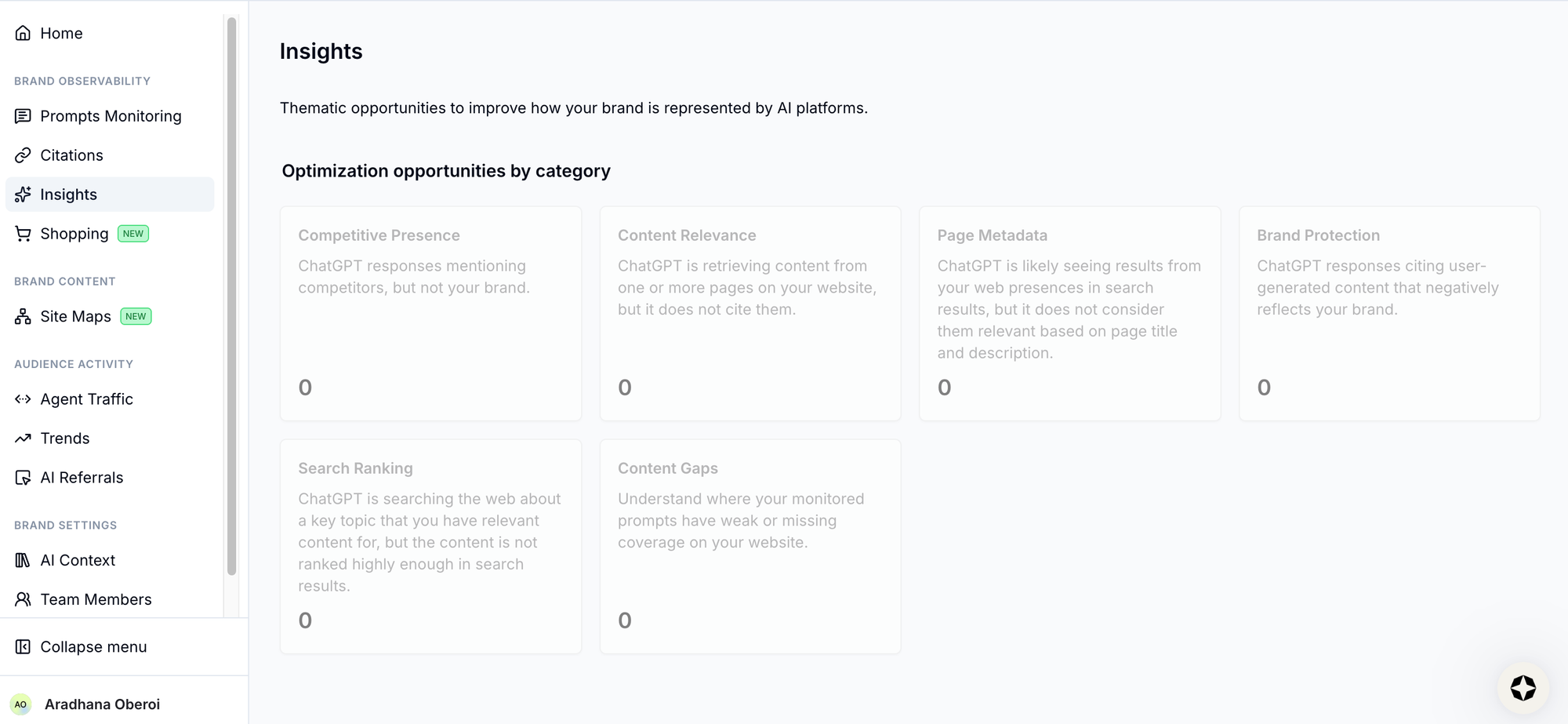
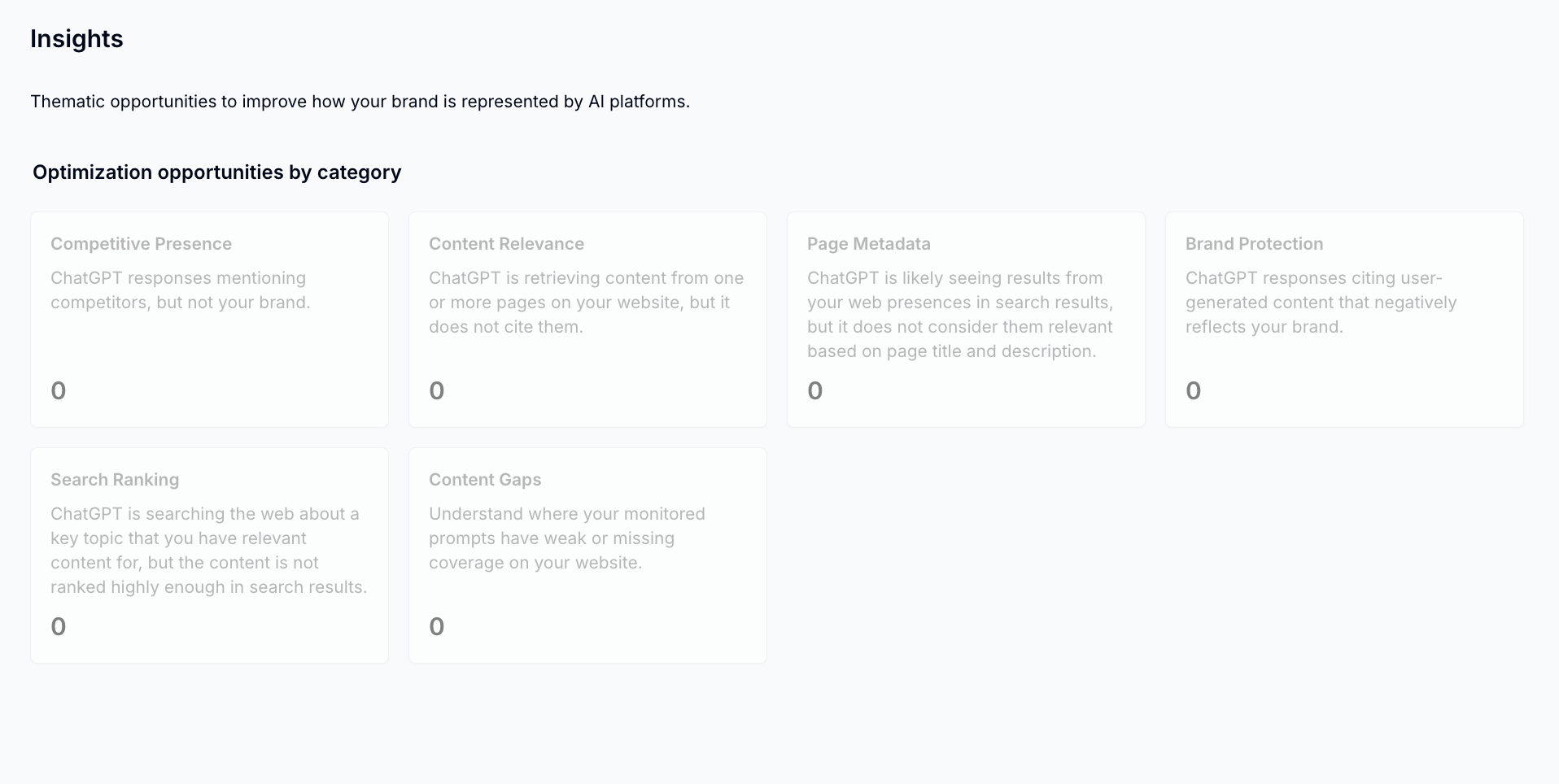
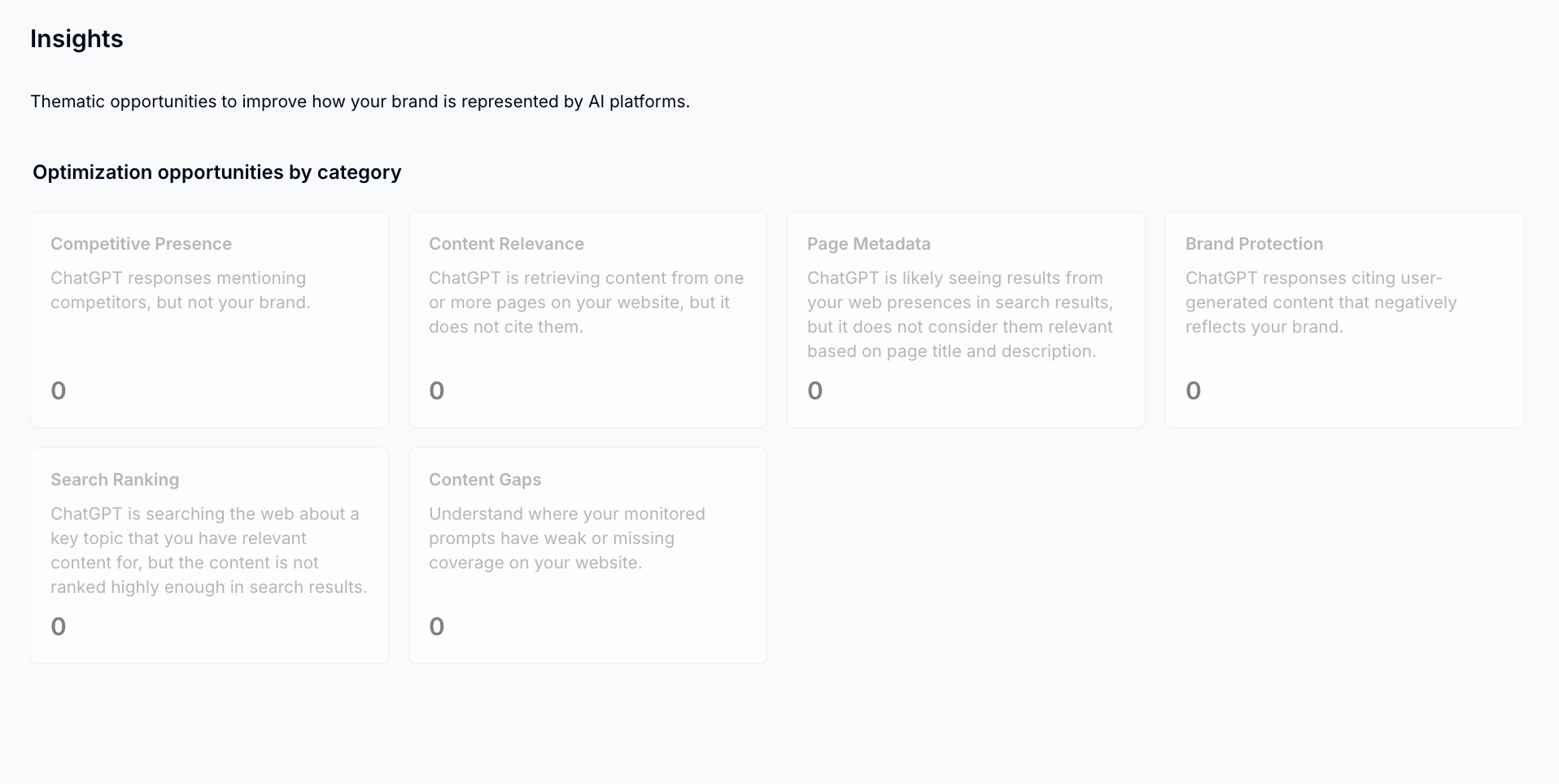
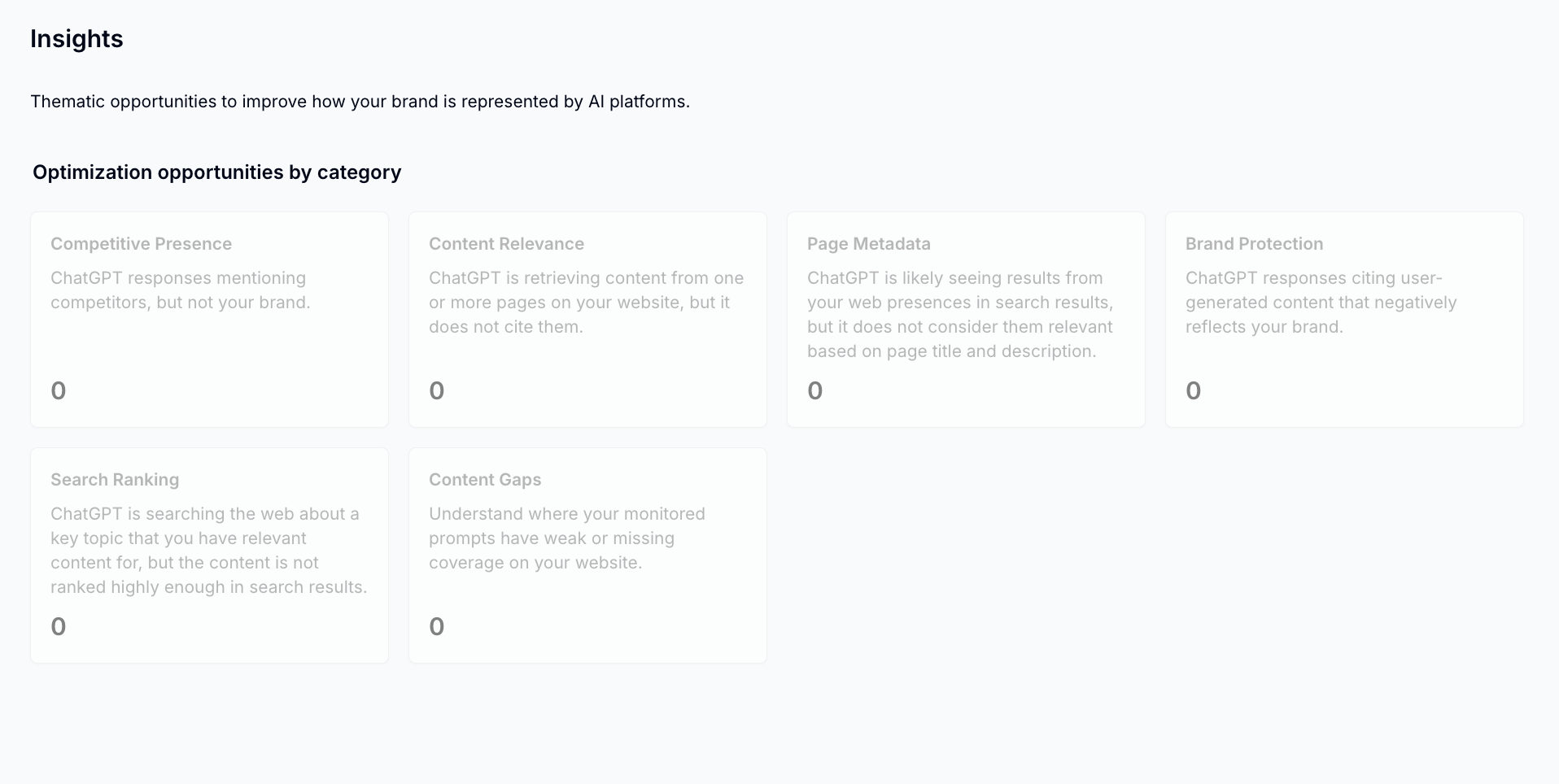
- After running the agency through Scrunch, the Insights tab, which promises "thematic opportunities to improve how your brand is represented by AI platforms", returned zero results across all six categories: Competitive Presence, Content Relevance, Page Metadata, Brand Protection, Search Ranking, and Content Gaps. It’s my day 3 of using this platform and writing this section, but the tab still has nothing to say. If it updates in the next 2-3 days I’ll update my review.
Update: Day 7 of using this platform. Still nothing. I'll stop checking now.
4. Prioritization within a strategy: what to do first
Once you've picked an action like content, outreach, Reddit, you still need to know which specific topics, URLs, or pages to start with.
Chosenly
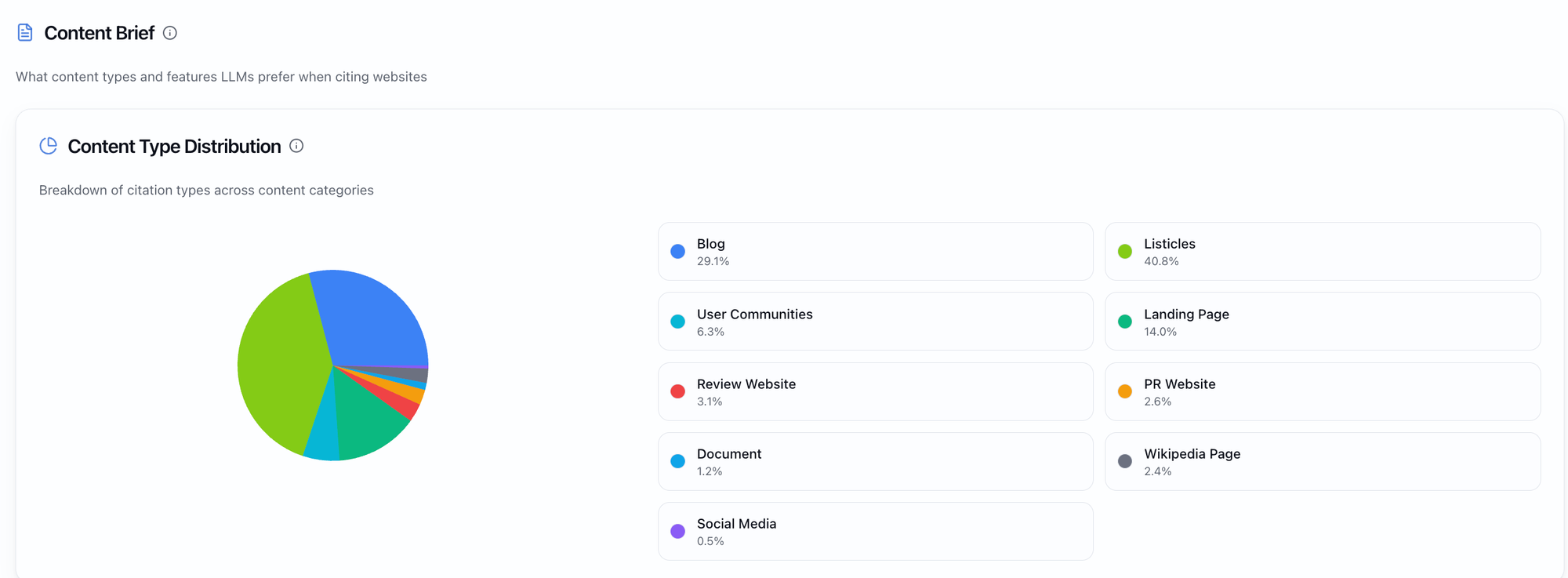
- For content, tells you exactly which page to create, update, or repurpose first based on prompt difficulty, search volume, and citation potential.
- For outreach, names the specific listicles to target, the exact contacts at each publication, and which placements will move your visibility the most.
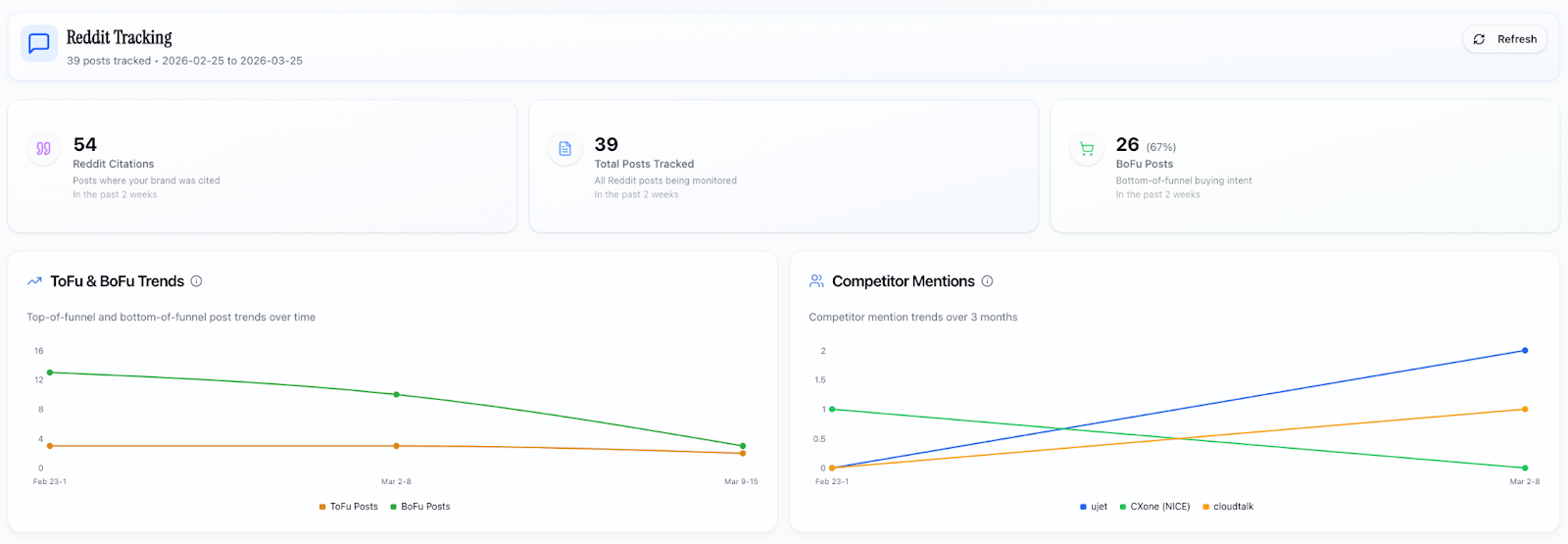
- For Reddit, identifies the specific threads and communities where AI models are forming preferences about your category, not just a vague instruction to participate.
Scrunch AI
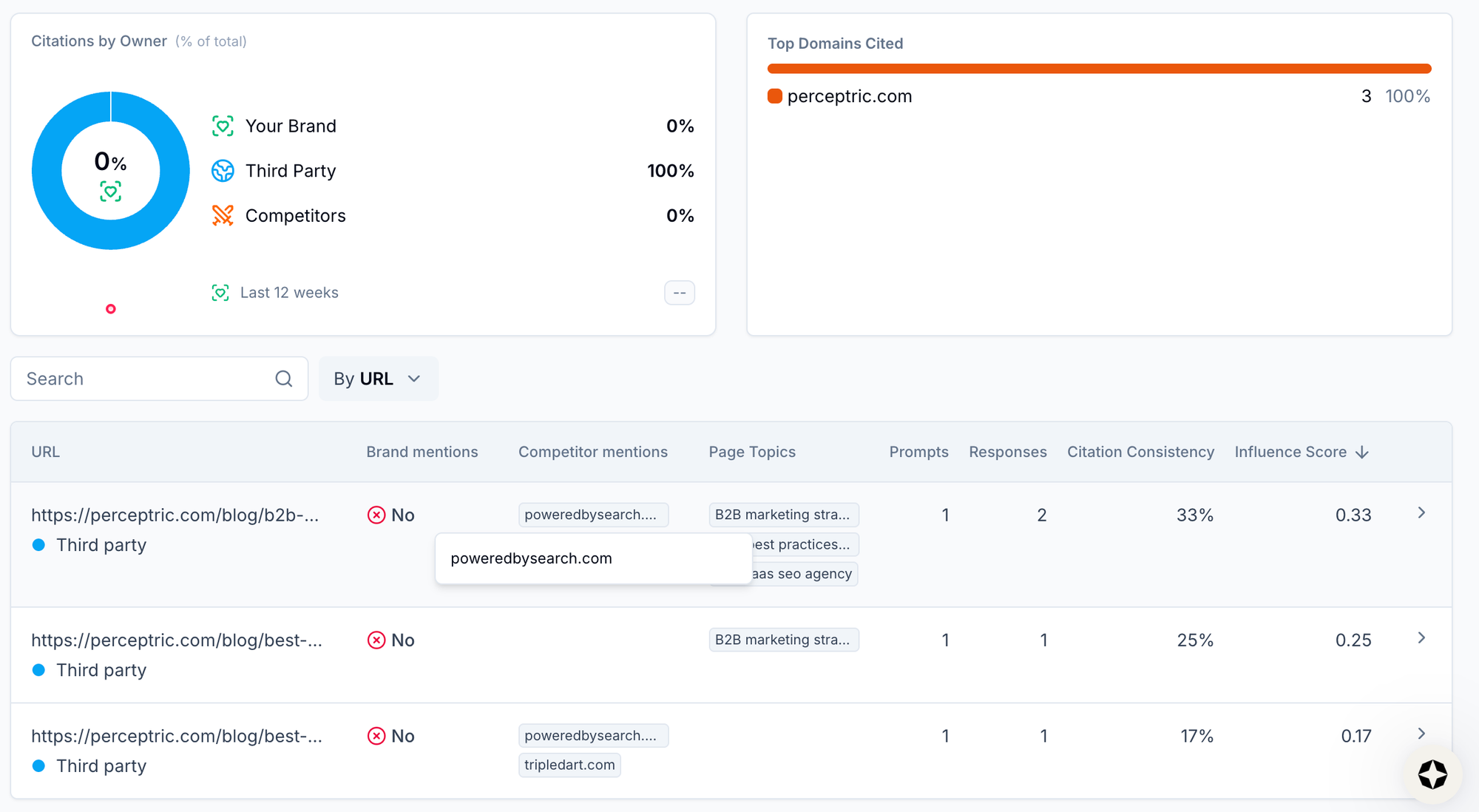
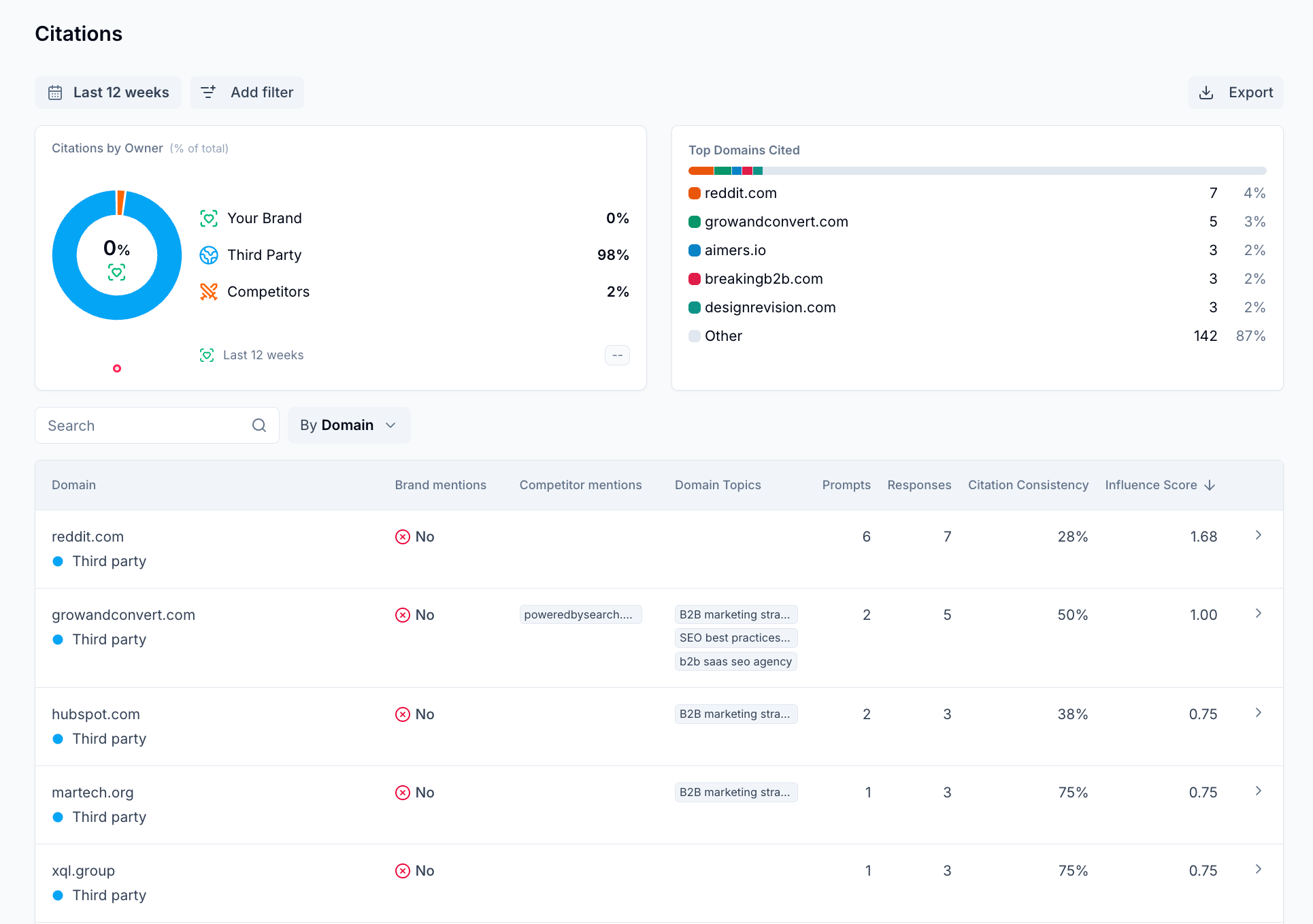
- The Citations tab shows you which domains AI is citing across your tracked prompts, with a Citation Consistency score and an Influence Score next to each. This was one thing that got my hopes high.
- Then when I tried to use it, i couldn’t. The Influence Score has no explanation of what it means, what a good score looks like. No instruction on which domain to target first, no contact information, no content brief, no indication of which pages are worth updating. I spent a hell lot of time trying to figure out how to turn this into an action plan. But to my utter disappointment, there was no outreach feature, no Reddit strategy, no positioning guidance. Just a very clean, very beautiful dashboard showing us exactly how invisible my company is with nothing to do about it.
5. How much data the tool gives you to actually do the work
The more data the tool gives you, the less guesswork you're left with when it's time to take action.
Chosenly
- For each topic, Chosenly shows the number of citations it has, a difficulty score, search volume, and your current rank. This tells you at a glance which topics are worth going after and which are too competitive to start with.
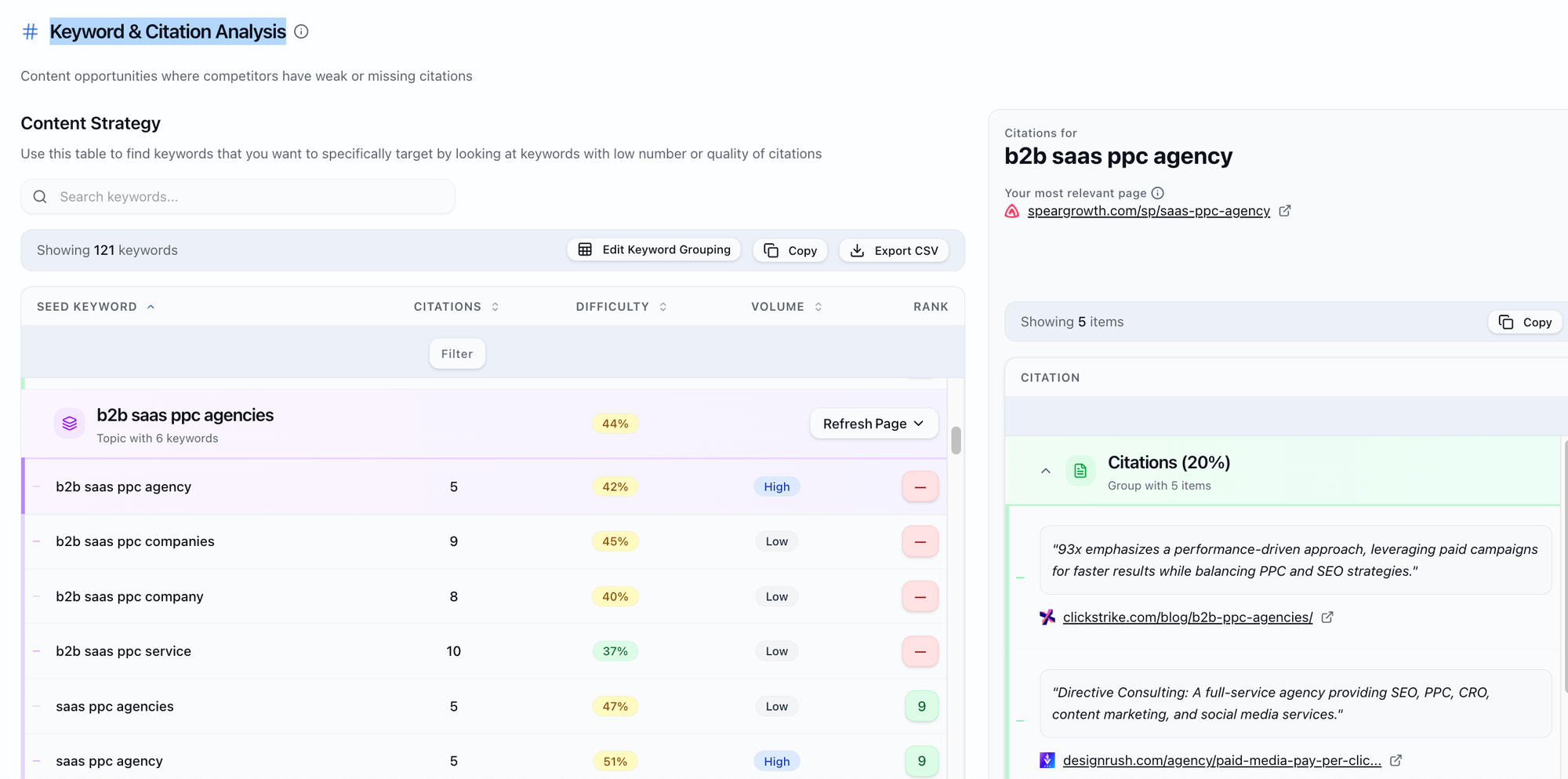
- Identifies your most relevant existing page for each topic and tells you whether it needs a refresh, so you are not starting from scratch when the page already exists on your site.
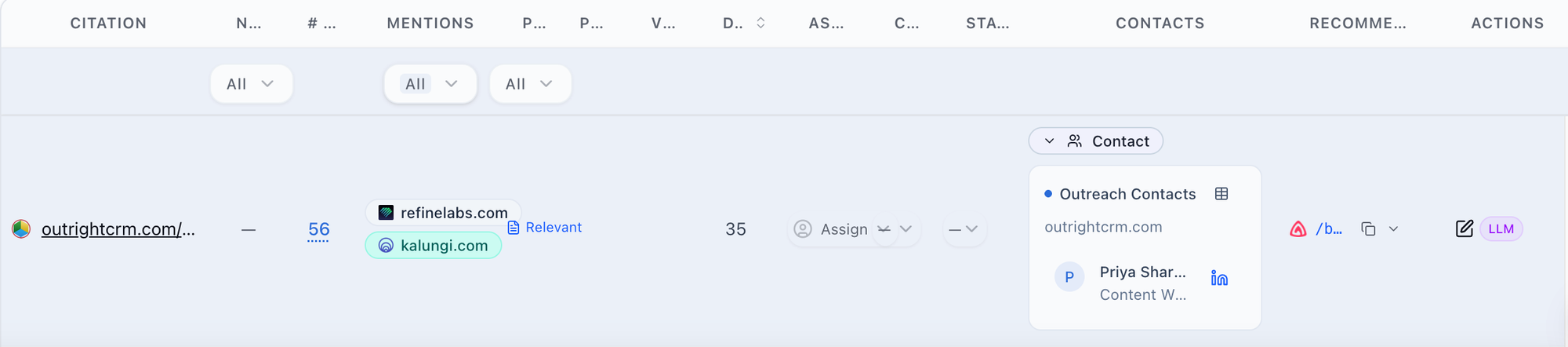
- For outreach, gives you contact information for specific people at each target publication, not just the domain name.
- Shows the logic behind every recommendation so you understand why it is being surfaced, not just what it is.
Scrunch AI
- I’ve already covered this in the last point. Scrunch didn’t go a good job here at all. Let’s see if once the Insights tab load something changes.
P.S. - Day 7 of using this platform. The tab hasn’t loaded yet 😕
6. Does the work for you
Knowing what to do is one thing. Actually getting it done is another, especially when teams do not have dedicated GEO resources yet.
Chosenly
- Creates the first draft of content pages for you, based on top cited pages.
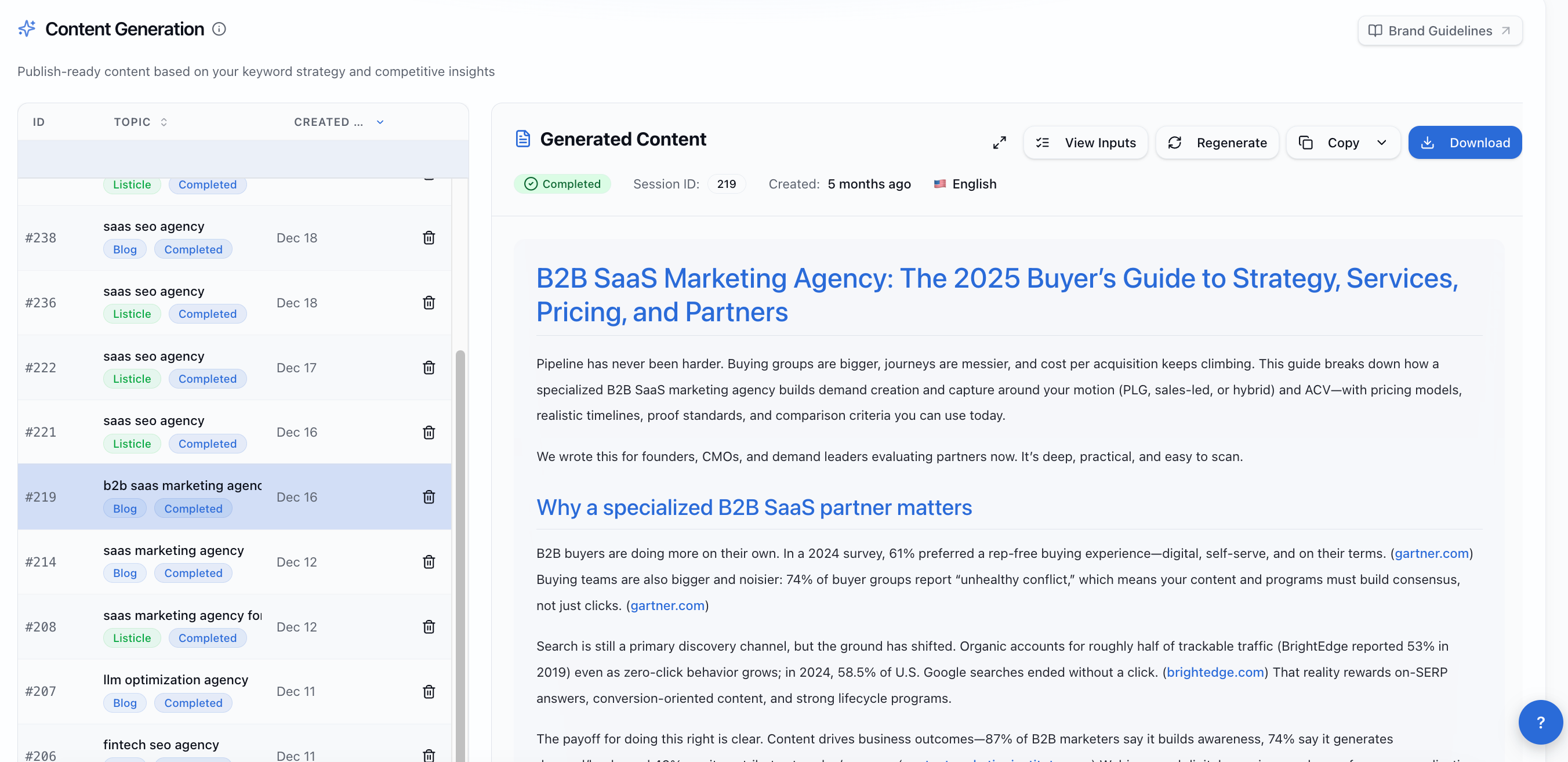
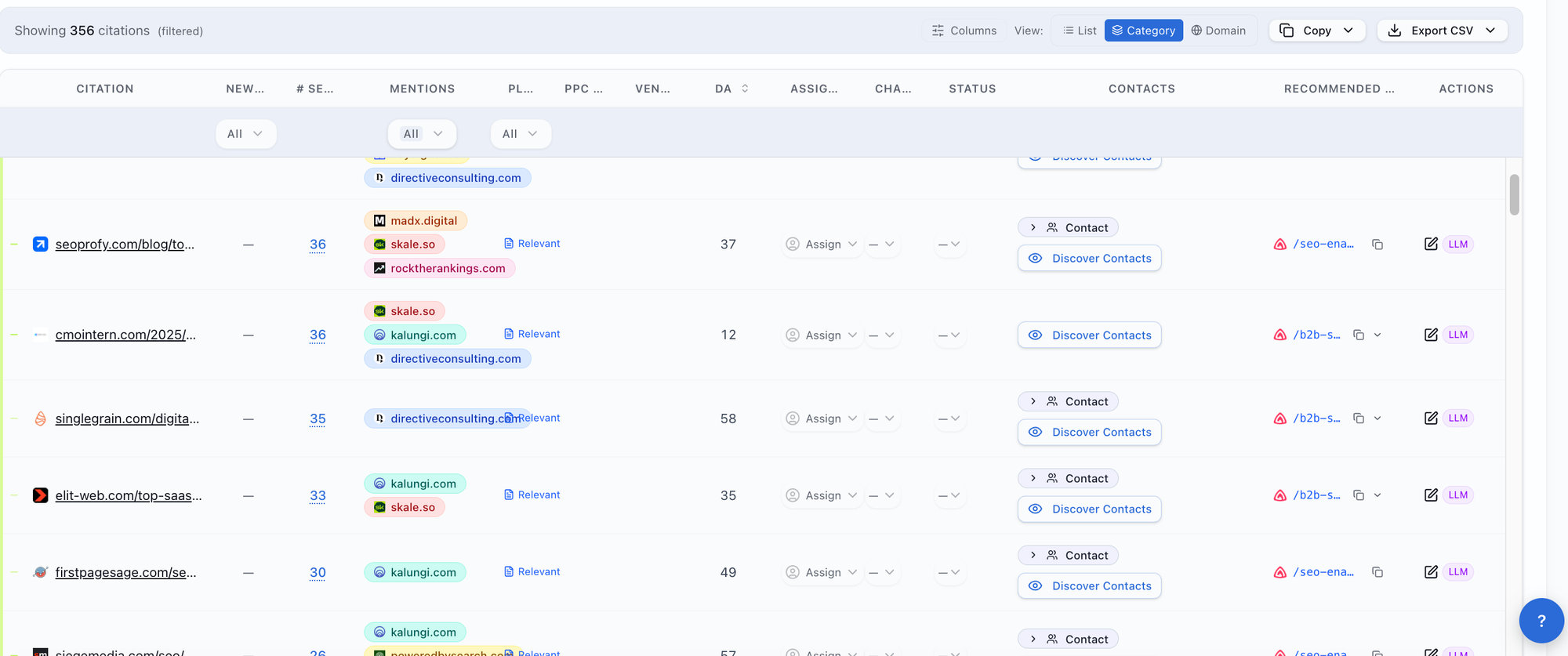
- Runs third-party outreach inside the tool. Chosenly identifies which listicles and citation sources to get into, prioritises them by traffic and answer-influence, finds the right contact at each one, drafts the outreach, and runs the outreach on your behalf.
- Automates content refreshes on existing pages.
- Automates Reddit.
- Note: Positioning and PR are not yet as automated as the rest of the stack.
Scrunch AI
- The Site Maps screen promises you can "optimize instantly with AXP or improve pages manually using clear recommendations." AXP is locked to Enterprise. Re: We couldn’t find any proof that even if you paid for the enterprise plan and did all of this work, it’ll actually help with AI visibility, so we actually recommend against setting this up.
- Zero automation across the board. No content drafting, no outreach, no Reddit, no content refreshes. The only recommendations are a list of audit flags and what you do with them is also up to you.
7. Human support
Even with the best tool, you will have moments where you are not sure what to do or need someone to actually run the work.
Chosenly
- Available on Slack whenever you need help, not just during a fixed window.
- Fortnightly calls with a dedicated GEO expert scheduled around your availability. They walk through your data, share playbooks, and build a plan with whoever is running GEO on your team.
- Available on every plan, not just Enterprise.
Scrunch AI
- Getting started is not simple. During onboarding, the platform auto-populated services we do not offer and same reflected in the prompts. We had to fix these manually before we could trust anything the tool was showing us. There was no guided setup and no human check.
- Core and Agency plan customers get email support only. Slack access and dedicated strategy calls are locked to Enterprise.
- There is no option on any plan to have someone from Scrunch run the work for you. The support team answers questions. The execution remains entirely yours.
Scrunch AI Pricing
Scrunch AI pricing
Scrunch starts at $250/month for brands and $500/month for agencies on the Core plans.
What those plans do not include:
- Content creation
- Content refreshes
- Listicle outreach
- PR and positioning
- Criteria mapping
- Query Fan-out
- Dedicated support
P.S. - These are all the features included in Chosenly’s monthly plan on the top of analytics 😉
Chosenly pricing
Chosenly starts at $200/month for the SaaS platform with consulting support. That includes 200 prompts, 100 outreach contacts, 4 AI-optimised content drafts, unlimited Reddit threads, unlimited seats, and dedicated Slack support.
Our verdict: Which GEO tool is better for you?
Scrunch is very good AI monitoring platform in this space. If your only job is to know where you stand in AI search, nothing does it more cleanly. But monitoring is not a GEO strategy. It is the starting line. Scrunch shows you the gap. It has no answer for how to close it. No content, no outreach, no Reddit, no positioning, and no guidance on where to even start.
We tested it on our own partner agency and the platform could not correctly identify what kind of business they are, let alone tell us what to do next.
Pick Scrunch if your only concern is technical AI crawlability and you have the Enterprise budget for AXP. Pick Chosenly if you are a B2B company that wants to actually show up in AI search, not just measure how invisible you are.
FAQs
I am currently on Scrunch AI. What would actually be different with Chosenly?
Scrunch tells you where you are not showing up. Chosenly tells you why, and then does something about it. With Scrunch, you still need to figure out which prompts are worth tracking, interpret the citation data yourself, and execute every fix separately through other tools or an agency. With Chosenly, the prompts are identified for you, the content gets drafted, outreach runs end to end, and a dedicated GEO expert works through the data with you on a regular basis.
Does Scrunch AI work for B2B service companies?
Not well. When we ran our partner B2B agency through it, it generated tool-comparison prompts and populated services we do not offer. The platform also has a Shopping tab built for e-commerce brands and has no criteria mapping for B2B buyer decisions. It was built with a broader, more product-oriented audience in mind.
Scrunch is cheaper than Chosenly. Why should I pay more?
Scrunch starts at $250 per month but covers only monitoring. Everything that actually moves your AI visibility, content creation, outreach, Reddit, positioning, still needs to happen somewhere else, whether through additional tools, an agency, or internal resources. When you account for that, the total cost of running a GEO strategy on Scrunch is significantly higher than the subscription price suggests. Chosenly does that work as part of the plan.
Scrunch AI funding: is it a stable company worth committing to?
Scrunch AI funding stands at $19M in total, including a $15M Series A led by Decibel with participation from Mayfield and Homebrew. The question is not whether they will be around. It is whether monitoring alone is enough for what you are trying to do.
Does Scrunch AI help me create content?
No. Scrunch identifies where content gaps exist but does not write the content, create briefs, or tell you which specific page to build first.
See Chosenly in action