
Query Fan-Out: What It's Really Telling You, and How to Act On It
Query fan-out shows what LLMs already believe about your category. Learn how to read it for positioning, not just content ideas


Query fan-out, in simple words, is “fanning out from the original query.” It’s a process in AI search where an LLM breaks your prompt down and expands it into multiple subqueries to answer it.
A lot of AI search tools now have a “query fan-out” feature in their dashboards. And the takeaway everyone walks away with is some version of: “add 2026 to your title” or “Optimize your content with subqueries.”
These aren’t exactly wrong. Just not very useful.
Query fan-out is a lot more than that. Read it right, and it shows you what LLMs look for when they answer a user’s query, and who they already think the winners are.
In this blog, we'll go deep into everything you need to know about query fan-out, and how to use it to win in AI search.
What is query fan-out?
Query fan-out is the set of background searches an LLM runs to answer your question (prompt). Instead of searching what you typed, the model combines your prompt with what it already knows about the topic, decides what more it needs, and "fans out" into multiple searches of its own.
Let’s take an example to understand this. We searched “best accounts receivable automation software” in ChatGPT.
Here’s what ChatGPT actually searched in the background:
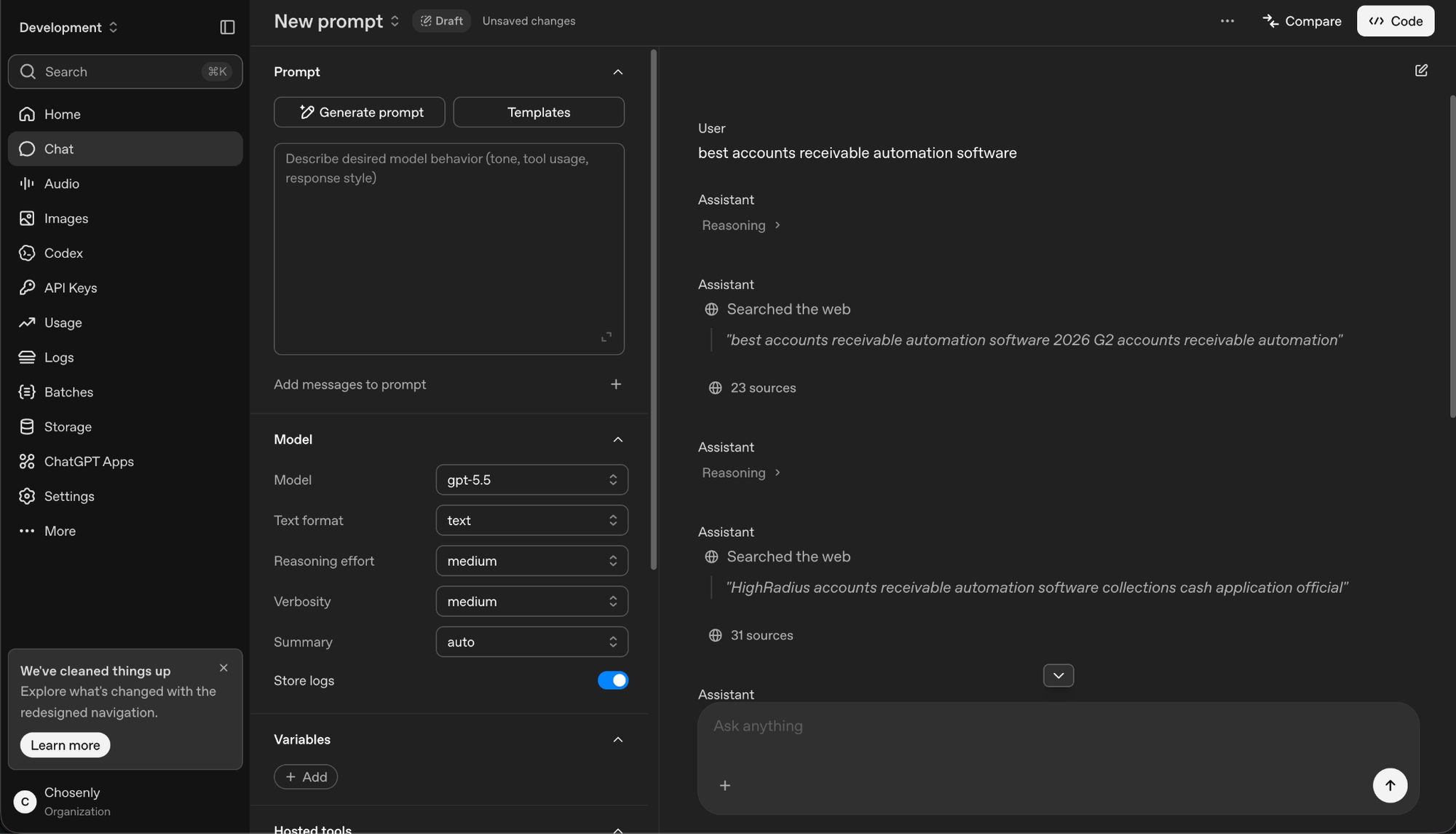
We typed one prompt. ChatGPT ran many different searches. None of them were exactly what we typed.
Here are a few things worth knowing about how ChatGPT works:
- Does it always look things up on the web? No. ChatGPT first decides if it needs to look anything up at all. If it’s confident it already knows the answer, it answers straight from its training data.
- How does it look things up? It searches incrementally. It runs a few searches, reads the results, figures out what’s missing, and if needed looks up for more queries. Each round shapes the next one.
- What is it looking for? Mostly confirmation. When ChatGPT searches, it’s usually double-checking what it already believes. It’s not starting from scratch. And you can see those beliefs in the fanout: the filters it adds, the features it looks for, and the companies it already has in mind.
Why does query fan-out matter in B2B marketing?
Showing up in AI search comes down to two things:
- Getting found: This is about your brand showing up in the sources the LLM reads when it builds an answer. Say someone asks ChatGPT for the best AR automation software, and it reads a G2 page and a few listicles to answer. If you show up as a citation, you got found.
- Getting chosen: It means being the one the LLM actually recommends. The top 3 or 5 or 10 brands that come up in AI responses.
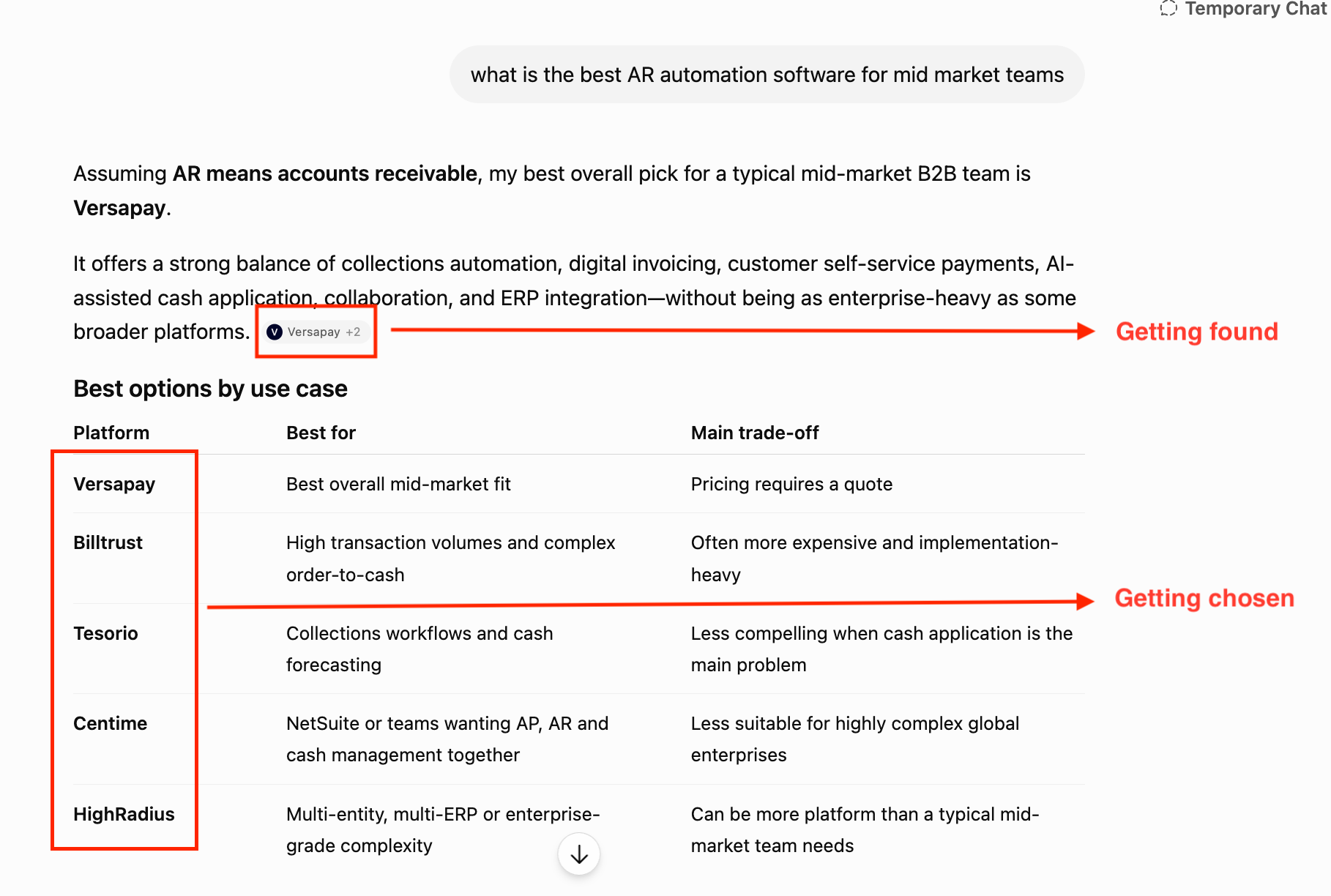
You could try to use the query fan-out data to get found: pull the queries, turn them into content ideas, and write content around them. Some people do this. In our experience, it hasn’t been very impactful.
Where the fanout really helps is getting chosen.
LLMs don’t just recommend whoever shows up most often. Showing up often gets you in the game. But when the model picks, it picks the company that best fits the criteria it has in mind for the category. The fanout is one of the places you can see those criteria.
This is what positioning for AI search looks like:
- find the criteria in your category where no competitor has clearly staked a claim
- collect objective proof that you’re the best
- make sure that proof shows up on your website and in the third party sources the model reads.
How to read and optimize for query fan-out?
So, how can you find different types of patterns in query fan-out? And most importantly, how to optimize for query fan-out?
To answer this, we asked both Claude and ChatGPT the same thing:
If I ask you "what is the best account reconciliation software," how would you come up with a recommendation? They answered almost identically.
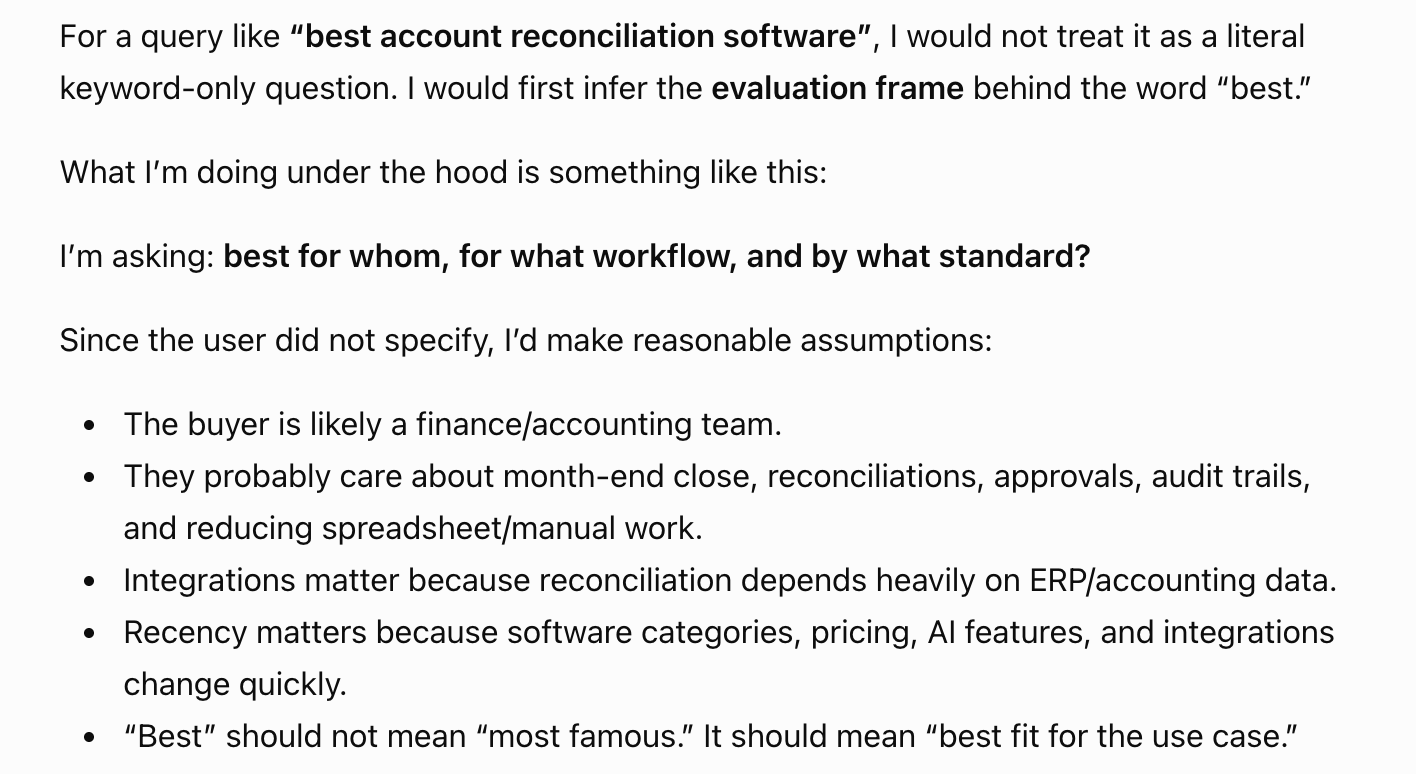
LLMs don't treat 'best' as a literal keyword. The first thing they do is work out what "best" should even mean, because you never said:
- Best for whom
- For what job
- What criteria makes it "the best"?
Since you didn't specify, LLMs fill in the blanks:
- The buyer is probably a finance team
- They likely care about month-end close and audit trails,
- Integrations matter because reconciliation runs on ERP data
- Recency matters because these tools change fast.
How does query fan-out work?
Across all the fanout queries we've looked at, the below patterns show up again and again:
1. Recency
LLMs are biased toward up-to-date and recent information. Whenever you ask ChatGPT something, it leans toward recently published or recently updated pages to find the answer.
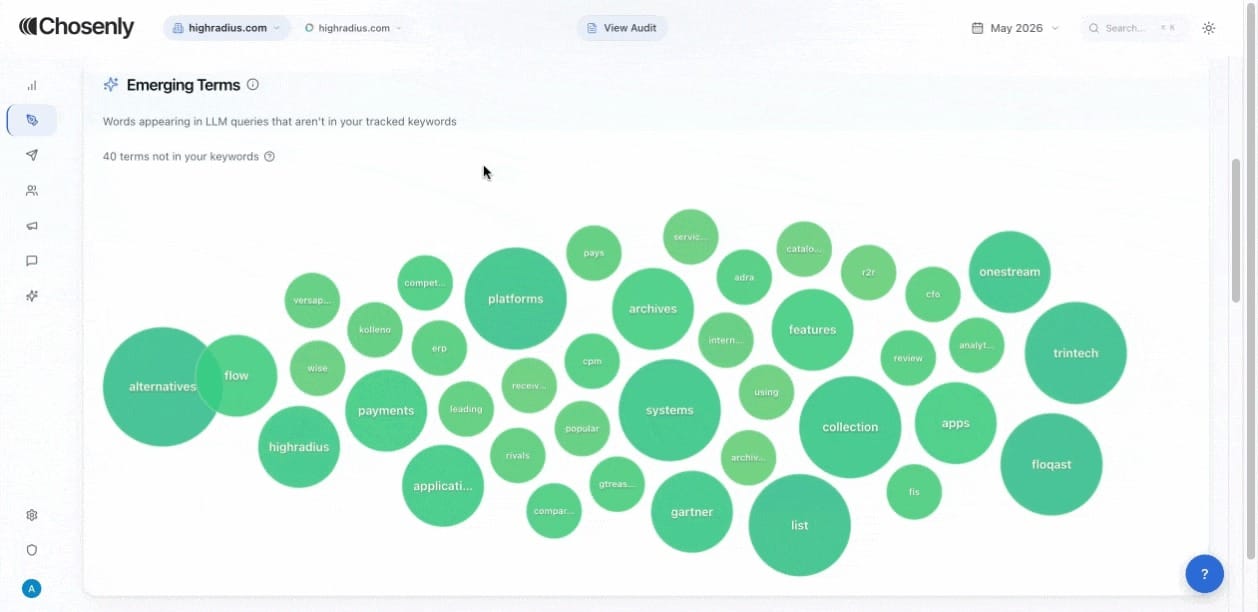
In the query fan-out you can see it often adds a year to the search on its own. In this dashboard, "2026" and "2025" turn up a lot of times across the sub queries.
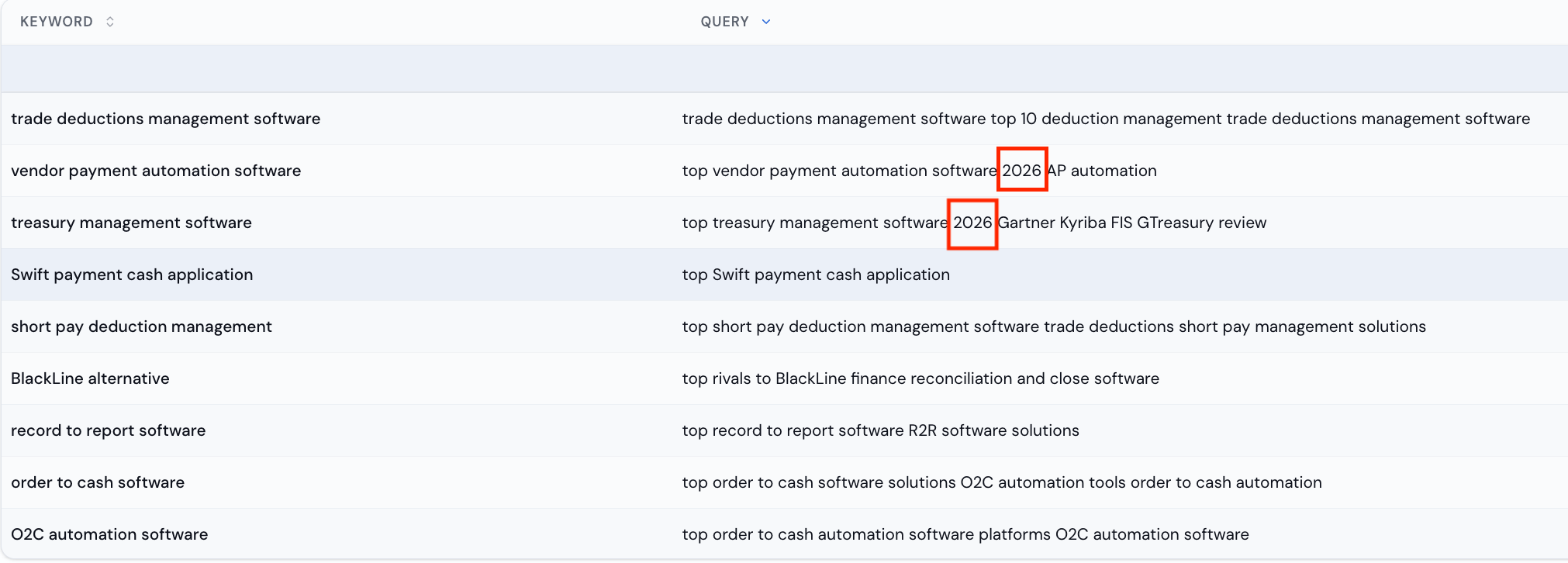
What to do: Honestly, this is pretty common but also pretty useless. If you want to, feel free to add dates in your titles. I’ve seen enough blogs without that ranking that I don’t really add this to mine. (See the title of this blog 🙂)
2. Features
While looking for an answer, LLMs add features you never asked for. In this dashboard, it kept adding features like analytics to its searches. This means that LLMs think these are some important, non-negotiable features that they must look for before recommending something.
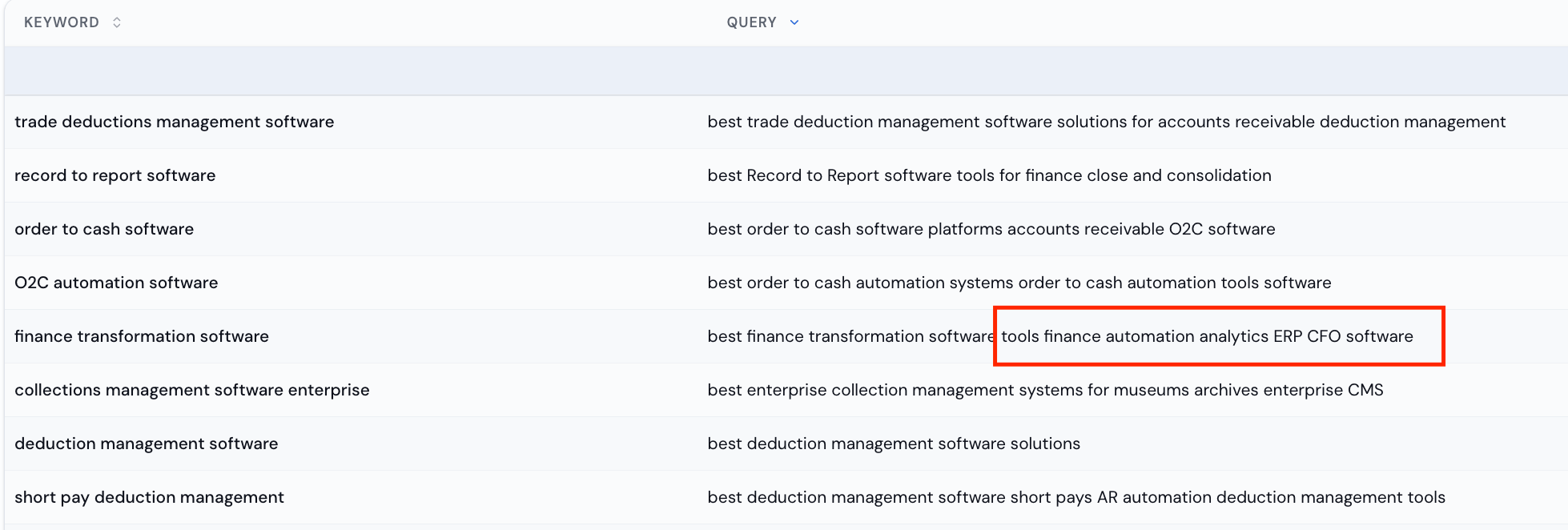
What to do: If you have these specific features that you see in query fanout, say it clearly on your website pages and anywhere else you’re mentioned. Make it impossible to miss. If you don’t have it, the fanout is showing you which features the LLMs expect in your category. That’s useful input for your product roadmap and your positioning.
3. Buyer (ICP)
Even if you don't specify an ICP in your prompt, LLMs also narrow down who the product is for. In this dashboard, the searches kept including “enterprise,” “for enterprises,” “B2B,” and “CFO.”
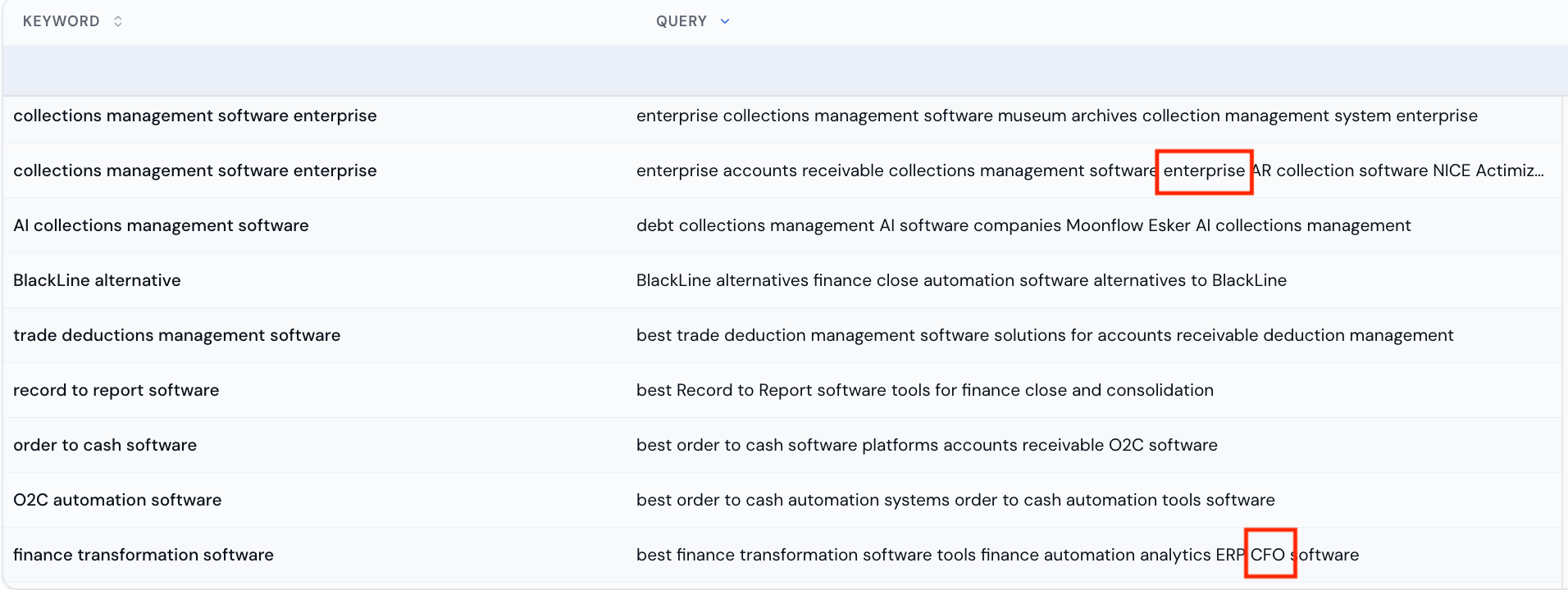
What to do: To optimize for such queries, you need to say clearly who you sell to. Where you say it is very contextual to your company. You can’t always add it to the homepage, because there could be five ICPs and you can’t put all five on the homepage. For example, Chosenly is used by a bunch of different teams, so we ended up creating a page for each of those teams and linking them in the navbar. In your scenario, you might want to add it to the homepage, or to other pages. The point is that it’s written somewhere LLMs can find it.
4. Integrations
We’ve also seen Integrations show up in the sub queries. For SaaS companies, integrations are pretty important for buyers. And unsurprisingly, since LLMs have been trained on the internet, they understand that. Whether or not your buyers explicitly mention which integrations they want, LLMs are looking for the integrations they believe are must-haves.
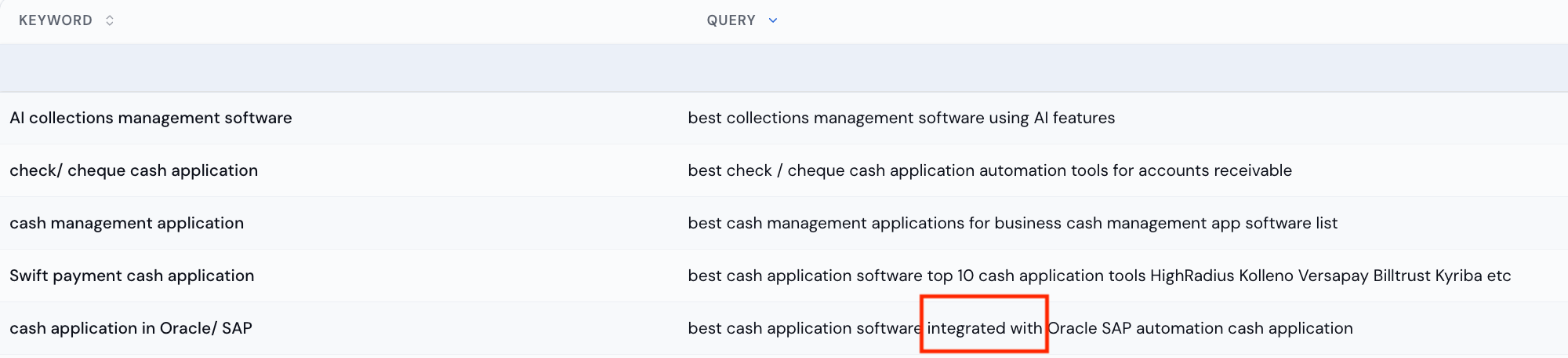
What to do: If a key integration is part of how buyers select you instead of the competition, spell it out wherever LLMs might look: your website, articles, third party content, etc.
5. Sources
LLMs trust some places more than others, and they sometimes name them right in the search. In this dashboard, you can see names like Gartner, GTreasury, and FIS.

What to do: Let’s be real - you cannot get into the Gartner Magic Quadrant just to show up in AI search. But there are some places you can get into. You can:-
- get your company listed in Gartner or G2
- gather some customer reviews and get them live
- get an article published there.
Sometimes new sites and publications show up in these sub queries too.
6. Competitors
When LLMs are confident about a category, they put company names right into their Sub queries. If your name isn’t in those sub queries, you weren’t on the shortlist before LLMs read a single page. This one the hardest signal to look at, and one of the most useful. It tells you where you stand at the start.
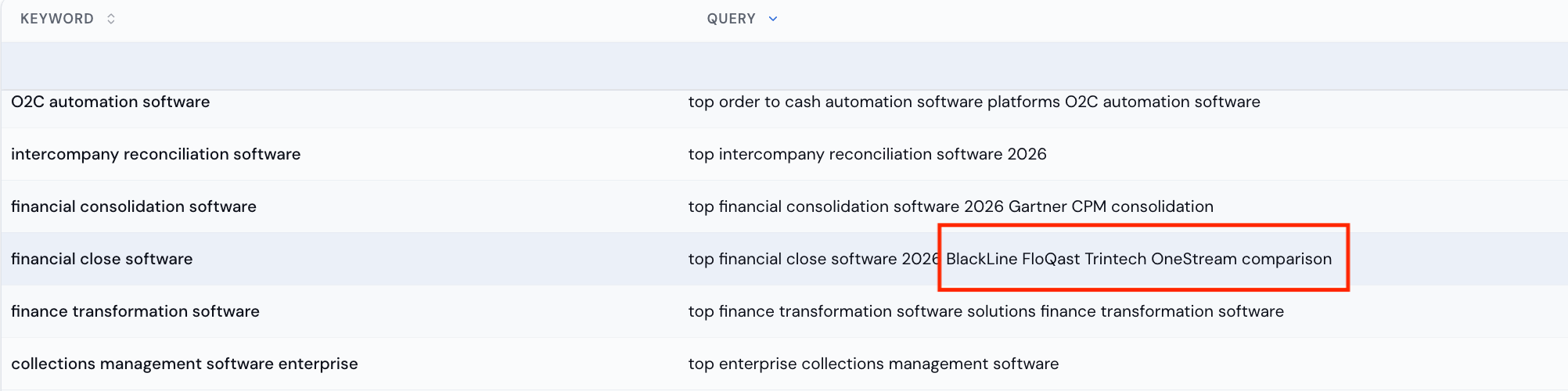
What to do: First, understand what this means. If the names are in the sub queries, not in the answer. Any article that mentions these names is more likely to get surfaced, because the search literally had those names in it. So if you’re not one of them, that sucks. It’s going to be a long road ahead: getting in is an accumulation of all the brand you’ve built.
But there’s a little hack you could try (we haven’t used this heavily but seen it working). Add these competitors to any listicles you write. When LLMs look for listicles, yours is slightly more likely to be cited. There’s always an argument that you don’t want to mention your biggest competitors, and sure, that’s valid too. But it’s the most actionable insight here.
The takeaway
So that’s how you optimize for query fan-out. One caveat: Optimizing just based on query fan-out data is slow. You read hundreds of queries to find a handful of things you can actually act on.
Also, be clear about what it’s good for. Fanout is a positioning tool. It shows you how LLMs judge your category, so you can make the case that you win. And even for positioning, reading the fanout by hand is the long way around. The real job isn’t digging up the criteria. It’s knowing what to do once you have them.
That's what the GEO Strategy Guide is for. It spends less time on where you find the signals and more on how to actually get found and get chosen. Query fan-out is one small piece of it. The guide is the whole picture.
FAQs
Is query fan-out data even useful, or just interesting?
Depends on how you read it. Most people find it interesting and stop there. They see ChatGPT added "2026" or a competitor's name, and move on. The useful way is to read it as how LLMs judge your industry: the features they expect, the buyer they have in mind, the sources they trust, and the competitors they've already shortlisted. That's the part that connects to positioning.
Does fanout reveal what ChatGPT has already decided about the best product in my category?
Largely, yes. When you see company names in the query fan-out, those are the players the model already believes are the top ones. It's looking for evidence to support a view it already holds.
Why does my competitor keep showing up in my fanout, and what should I do?
You can do these two things:1. Add these competitors to the listicles you write. When LLMs search for their name, your listicle becomes more likely to get picked up.
2. Ask why they're on the shortlist: which feature, buyer, or source do they own? Then either build a stronger case on that same point, or find a criterion nobody owns yet and make yourself the obvious answer for it.
How do I actually use fanout data to improve my AI search visibility?
Treat it as one input into your positioning. You can read your highest-priority prompts for the niches, features, buyer, and competitors from the query fan-out data, then make your case on the ones that matter.